Editorial note (5 November 2026): this article was added to Diving LATAM today and filed under 3 November, the date of the reported event or original announcement. The archive date is not the actual publication date.
Quintana Roo reports more than 587,000 tourists took part in diving activities in 2025, or 2.9% of visitors. Presented at DEMA Show 2026, the figure counts people, not individual dives or dive-industry revenue.
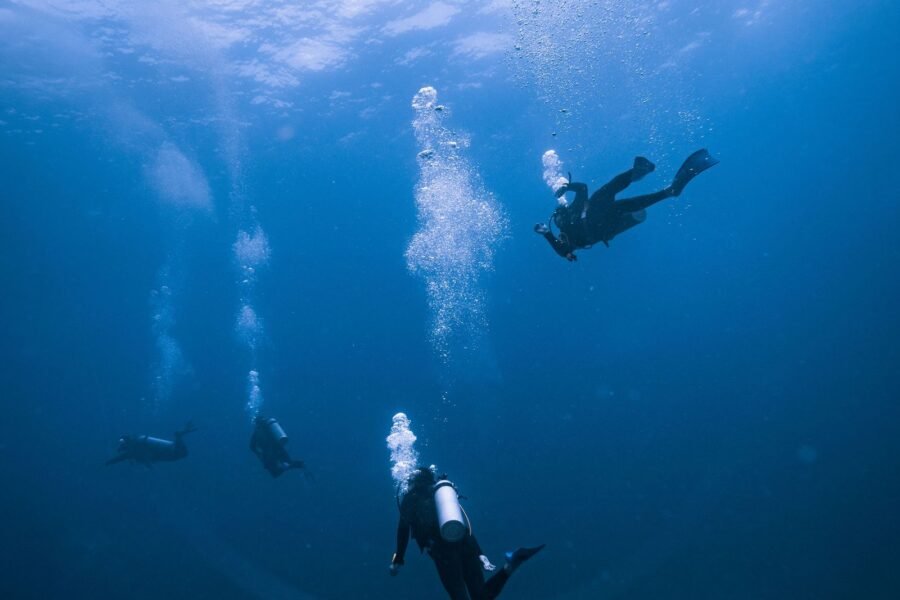
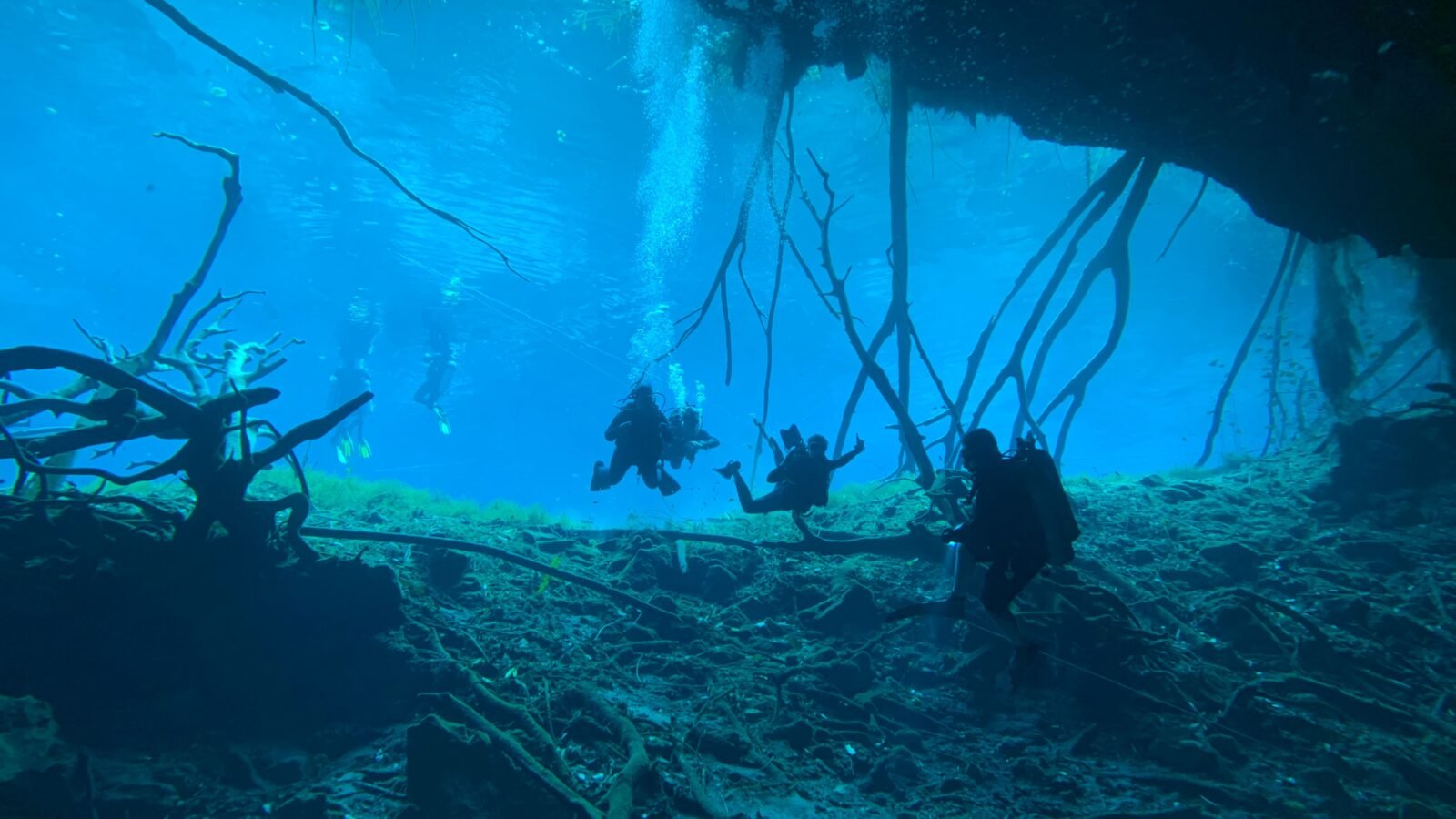
Diving LATAM Newsroom. Archive photograph of divers in a Mexican cenote credited to Francisco Davids / Pexels; not from the DEMA announcement.
During DEMA Show in New Orleans, Quintana Roo’s Tourism Secretariat (SEDETUR) announced on 3 November that more than 587,000 people participated in diving activities in the Mexican Caribbean in 2025. The figure amounts to 2.9% of the destination’s tourists. Official source.
A useful but incomplete number
One tourist may book multiple dives and use several providers. Therefore, 587,000 tourists cannot be described as 587,000 dives, bookings or individual dive-centre customers. Nor can an estimated industry turnover be calculated by multiplying that total by an arbitrary trip price.
When presenting its Cave and Cavern Diving Guide on 29 October, SEDETUR reported a 2.4% share of tourists in 2024 and 2.9% in 2025. This comparison is worth investigating, but without detailed methodology it cannot establish that the shift reflects a proportional rise in actual demand or industry revenue.
Seven destinations under one campaign
Isla Mujeres, Cancún, Puerto Morelos, Playa del Carmen, Cozumel, Tulum and Grand Costa Maya were promoted together. Their products are not interchangeable: depth, environments, conditions, boat operations and visitor profiles vary widely. An introductory reef experience, a wreck dive and a cavern trip require different operational safeguards.
The attention paid to cenotes and caves makes accurate language essential. Guided cavern diving within the daylight zone is not equivalent to penetration into cave systems. Responsible marketing must explain differences in training, equipment and exposure to hazards.
What the industry should measure
A useful economic assessment needs direct spending per diver, activity by location and season, actual dive counts, boat occupancy, employment, incident statistics, small-operator participation and pressure on individual sites. Mooring compliance, carrying capacity and the condition of reefs and cenotes should also be monitored. Environmental benefits cannot be inferred merely from higher arrival numbers.
What Latin America can learn
Quintana Roo offers a potentially useful market-reach indicator for other dive destinations. Yet establishing the true value of underwater tourism requires asking who captures the revenue, who bears operating costs and how conservation is financed. Those questions matter more to dive professionals than an isolated promotional number.