
Greater Caribbean countries have agreed to strengthen ocean observations, early-warning systems and the use of science in environmental decision-making. IOCARIBE’s agenda also addresses coral reefs, sargassum and coastal resilience. But the 2030–2037 strategy remains under development: its impact will depend on funding and on turning regional priorities into measurable results.
The future of marine conservation in the Caribbean is increasingly being discussed in terms of data, scientific capacity and international cooperation. Identifying vulnerable ecosystems or designating protected areas is not enough. Governments also need to understand how the ocean is changing, anticipate risks and determine whether conservation measures actually work.
That was the backdrop to the nineteenth intergovernmental session of IOCARIBE, the Sub-Commission for the Caribbean and Adjacent Regions of UNESCO’s Intergovernmental Oceanographic Commission (IOC), held in Guatemala City in late September 2026.
Member States agreed on regional priorities and adopted a draft Regional Work Plan and Budget for 2028–2029, along with decisions and recommendations to be considered by the IOC Assembly in 2027. A regional workshop on September 28 also advanced the direction of a medium-term strategy for 2030–2037.
This does not mean that a final, fully funded strategy through 2037 has been approved. It is a developing work agenda. That distinction matters when assessing what can change now and what will depend on later agreements, institutional capacity and investment.
A Caribbean that needs better data to protect its reefs
The region faces overlapping pressures: ocean warming, coral bleaching events, coral diseases, pollution and coastal change. Long-term regional monitoring provides a way to understand their scale.
The Status and Trends of Caribbean Coral Reefs: 1970–2024 report, released in December 2025 by the Global Coral Reef Monitoring Network (GCRMN), estimated a 48% relative decline in hard coral cover since the early 1980s. Estimated regional cover fell from 28.1% in 1980–1985 to 14.6% in 2019–2024.
The assessment drew on more than 23,000 surveys at nearly 14,000 monitoring sites. It also reported an approximately 85% increase in benthic macroalgal cover and a 1.07°C rise in mean sea surface temperature over reef areas between 1985 and 2024.
These are regional trends, not a uniform diagnosis for every reef or evidence that each change has a single cause. Still, they show the environmental and economic importance of protecting ecosystems that support fisheries, coastal protection and marine tourism.
IOCARIBE’s four ocean science priorities
UNESCO’s official announcement on October 6 outlines four priorities emerging from the regional discussions.
1. Ocean observations and early-warning systems
Member States seek to maintain ocean observations, improve forecasting and strengthen the Global Ocean Observing System (GOOS) and national data systems. The aim is to anticipate threats and improve the resilience of coastal countries.
Better information on temperature, currents and sea conditions helps both research and risk management. For dive operators, it could support activity planning and operational assessments if that information becomes accessible through usable services. A regional science agenda does not automatically deliver new tools to every business.
2. Research that informs public decisions
The second priority is to connect research and monitoring efforts, reduce duplication and make scientific evidence more readily available to the institutions managing marine resources.
Coral cover, disease incidence, water quality and habitat recovery become more valuable indicators when they inform decisions and help verify conservation outcomes. Similarly, the success of a coral restoration project cannot be judged solely by how many fragments were transplanted: survival, ecological contribution and long-term monitoring matter.
3. Addressing specific environmental challenges
IOCARIBE plans to continue existing work while paying greater attention to coastal resilience and restoration, sustainable ocean planning and management, blue carbon, harmful algal blooms, sargassum and emerging ocean-observation technologies.
These topics are connected but distinct. Blue carbon concerns carbon stored in coastal ecosystems such as mangroves and seagrass beds. Harmful algal blooms require specific monitoring. Sargassum management, meanwhile, needs locally relevant observations, research and response protocols.
4. Institutions, cooperation and funding
The fourth challenge is turning priorities into workable programs. UNESCO describes 2028–2029 as a period for strengthening institutional capacity, mobilizing resources and laying practical foundations for the proposed 2030–2037 strategy.
An observation network needs more than deployed equipment. It requires trained personnel, compatible protocols, maintenance, data processing and sustained financial support. Whether those resources materialize will be decisive.
Sargassum requires responses across national borders
Sargassum has become a serious environmental and economic concern for parts of the Caribbean coastline, although the extent and timing of landings vary by season and oceanographic conditions.
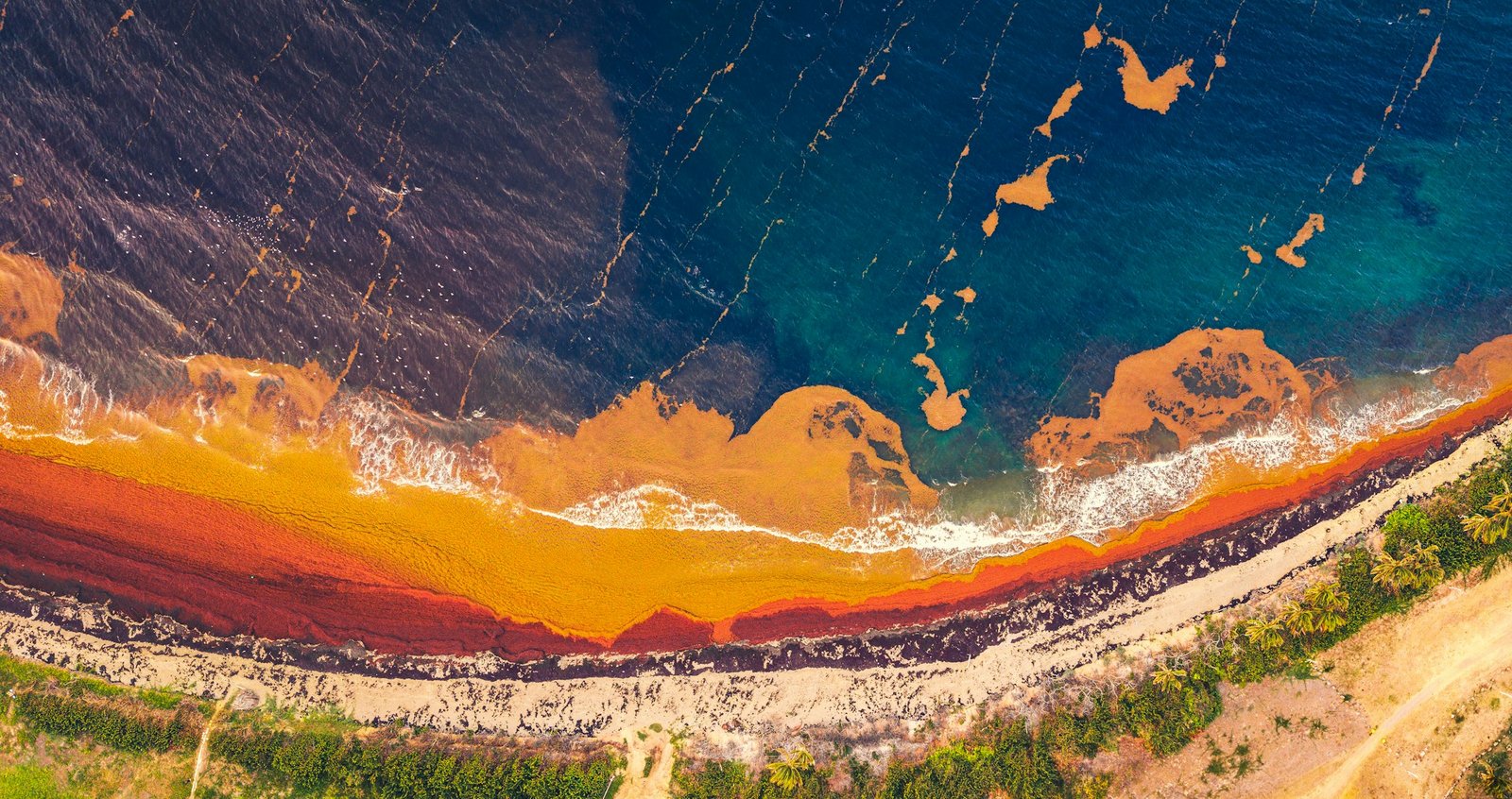
A key distinction is between floating sargassum offshore—an important natural habitat for marine species—and the large accumulations that reach some coasts, where decomposition can affect ecosystems, infrastructure and tourism. The US National Oceanic and Atmospheric Administration (NOAA) documents these different roles and the value of monitoring and forecasting.
Another distinction matters: benthic macroalgae tracked in coral reef monitoring studies are not the same phenomenon as the arrival of pelagic sargassum on beaches.
Regional cooperation is also progressing through a separate process. In September 2026, the Association of Caribbean States reported that members of its Sargassum Subcommission had agreed on a common position to improve monitoring, data exchange, early warnings and cooperation. That initiative is distinct from IOCARIBE’s agenda but reflects a shared need for coordination.
What changes—and what does not—for the diving industry
IOCARIBE’s priorities operate at the scientific and intergovernmental level. Nevertheless, they may eventually be relevant to dive centers, marine operators, tourism destinations and marine protected area managers.
- Better marine information: observations and forecasts that could support operational planning if data services reach users.
- Reef monitoring: comparable evidence on trends, threats and the effects of conservation measures at dive sites.
- Technical participation: potential opportunities for diving professionals to assist research and citizen-science projects under standardized protocols and scientific oversight.
- Destination planning: data that could inform marine spatial management, infrastructure decisions and sustainable tourism.
The announced agenda does not itself create new diving permits, certifications, quotas or general operating requirements for dive centers. It would be misleading to present such changes as already approved. Its immediate relevance lies in where scientific collaboration is heading and which tools may be developed.
Measuring results will matter as much as setting priorities
Marine conservation requires continuity. A one-off monitoring campaign cannot replace observations maintained over many years. Restoration projects also need ecological assessment of survival, functional recovery and persistent threats—not merely a tally of interventions.
Useful indicators for tracking regional implementation would include continuity of observation stations, public availability of data, consistent monitoring protocols, the use of evidence in management decisions and changes in environmental outcomes.
These are suggested criteria for journalistic follow-up, not numerical commitments announced by IOCARIBE.
The next institutional decision comes in 2027
The IOCARIBE session also elected a new Board of Officers. Member States chose Dr. Héctor Hugo Gojón Báez of Mexico as chair. The vice-chairs are Ana Lucía Caicedo Laurido of Colombia, Andrea Paz Barillas of Guatemala, and Rahanna Juman of Trinidad and Tobago, who was re-elected.
Decisions and recommendations from the session will be presented to the IOC’s 34th Assembly in 2027. The 2028–2029 work period is then intended to help establish practical foundations for the medium-term 2030–2037 strategy.
Agreeing on shared priorities is an institutional step forward, but it is not yet evidence of ecological recovery. The challenge is to show that better ocean science produces better management decisions, and that those decisions lead to measurable benefits for ecosystems and coastal communities.
The Caribbean has identified what it needs to study and coordinate. It must now show how this agenda can translate into effective ocean protection.
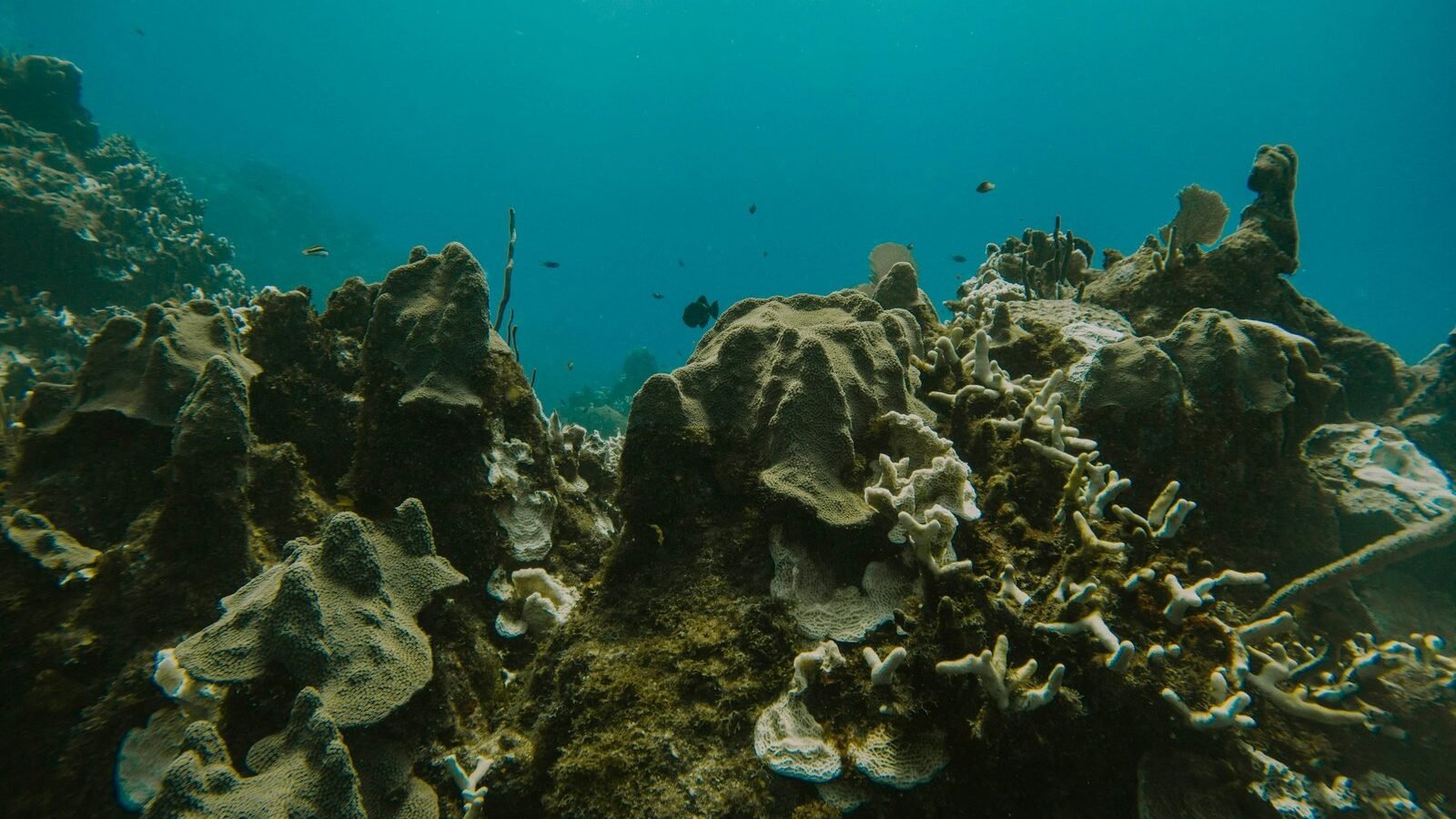
Cover photograph: coral reef on the eastern end of Grand Cayman, Cayman Islands. Illustrative archival image; it neither documents the IOCARIBE meeting nor represents the condition of every Caribbean reef. Photo: Conner Baker / Unsplash.
Primary sources and further reading
- UNESCO Intergovernmental Oceanographic Commission. IOCARIBE-XIX: Caribbean Member States set priorities for ocean science to 2037. October 6, 2026.
- Global Coral Reef Monitoring Network. Status and Trends of Caribbean Coral Reefs: 1970–2024. December 2025.
- GCRMN. Regional coral reef report findings. December 9, 2025.
- NOAA. Educational information on sargassum (Spanish).
- Association of Caribbean States. Regional common position on sargassum. September 2026.
