
Three Eastern Pacific diving destinations where big marine life, remote expeditions and conservation combine into something extraordinary.
Some destinations stay with us because of their scenery. Others are remembered for what happens beneath the surface. In the Eastern Pacific, three places stand out for divers hoping to encounter large marine animals: Ecuador’s Galápagos Islands, Colombia’s Malpelo and Costa Rica’s Cocos Island.
These are no ordinary destinations. Reaching some of them means spending long hours at sea, travelling far from shore and accepting that the ocean will shape much of the experience.
And no one can promise what will appear on a dive. That uncertainty is part of the appeal.
Hammerhead sharks may gather in large schools, rays pass through the blue and oceanic predators still play a vital role in these marine ecosystems.
Yet each island has a character of its own.
Galápagos: an underwater world unlike any other
About 1,000 kilometres from mainland Ecuador, the Galápagos are far more than the islands that helped inspire Charles Darwin.
Beneath the waves, their exceptional diversity reflects an unusual combination of tropical water, cold currents and volcanic geography. Together, these forces create habitats for very different species.
For divers, that mixture can produce encounters that are hard to find elsewhere.
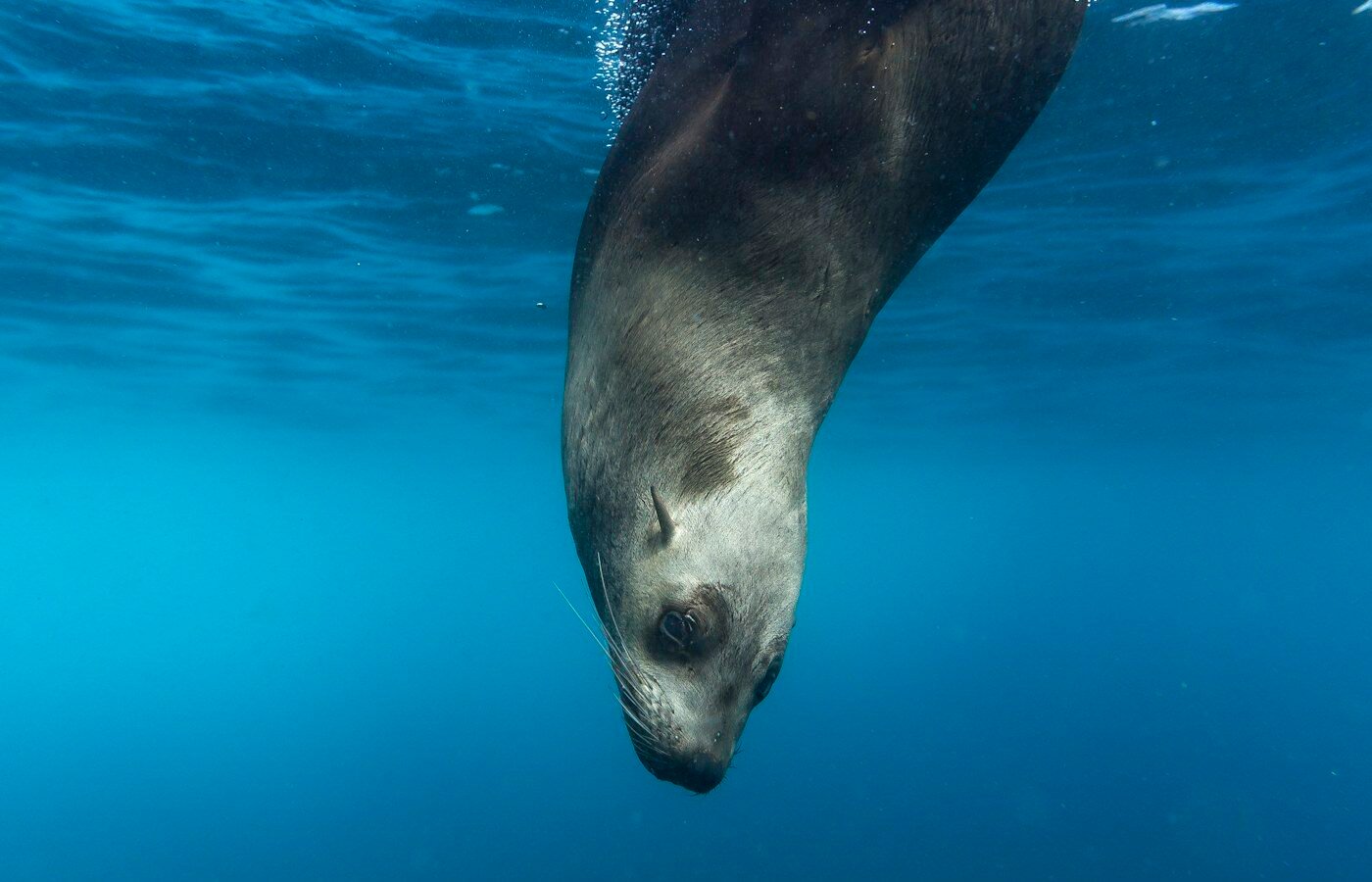
Sea lions are among the archipelago’s most engaging residents. Agile and curious, they sometimes approach divers and circle them effortlessly. Marine iguanas offer an almost unmatched spectacle: reptiles that forage underwater in their own distinctive way.
Then there are the sharks.
Wolf and Darwin islands are internationally known for encounters with large pelagic animals, especially hammerheads and other oceanic shark species.
But Galápagos is not a single, standardised dive experience. Some dives are reached from inhabited islands; others require specialist liveaboard expeditions to more remote sites.
That variety opens different ways to explore the archipelago, although its most demanding sites call for suitable experience, preparation and confidence in currents.
What makes Galápagos exceptional is not just one animal. It is the chance to see an ecosystem whose rhythms feel entirely its own.
Malpelo: in the realm of big sharks
Malpelo is different.
Around 500 kilometres off Colombia’s Pacific coast, this small rocky island has no tropical beaches, hotels or tourist towns. From the surface it looks like a huge outcrop rising from a seemingly endless ocean.
Its real treasures lie beneath the water.
Underwater walls drop into deep water, while currents carry nutrients that support remarkably rich marine life.
Malpelo is especially famous for aggregations of hammerhead and silky sharks. UNESCO documents the site’s importance for these species, helping explain its international conservation status.
For many experienced divers, seeing a school of hammerheads move through the blue is a lifelong ambition.
But Malpelo is not a destination for improvisation.
Its isolation calls for expedition vessels prepared for extended passages. Currents, site depths and sea conditions demand relevant diving experience.
Fundación Malpelo sets specific visitor requirements, including advanced-level certification or an equivalent qualification and documented diving experience. Travellers should confirm current requirements before booking.
The reasoning is simple: far offshore, even a relatively small problem can become much more serious.
Much of Malpelo’s extraordinary appeal lies in the fact that it remains remote. Here, visitors adapt to the ocean, not the other way around.
Cocos Island: the adventure begins before the first dive
Roughly 550 kilometres from Costa Rica’s mainland lies Cocos Island, a tropical, forest-covered outpost in the Pacific Ocean.
Getting there is an expedition in itself.
The sea crossing takes up a significant portion of the trip. When the island finally appears, it offers a striking contrast with Malpelo: green mountains, steep cliffs and lush vegetation sustained by abundant rainfall.
For divers, though, the main attraction is still beneath the surface.
Cocos Island is known for hammerhead sharks, reef sharks, rays and other pelagic marine life.
Currents, rocky formations and the animals that frequent them have made sites such as Bajo Alcyone and Manuelita familiar names to divers researching Pacific expeditions.
One dive might deliver an unforgettable encounter. Another, under different conditions, may unfold very differently.
Exploring Cocos therefore takes more than enthusiasm. It requires suitable experience, careful preparation and realistic expectations.
People do not travel all this way to tick guaranteed animals off a checklist. They come to explore one of the Pacific’s most remarkable natural environments.
Three destinations, one ocean
Although they belong to different countries, Galápagos, Malpelo and Cocos Island share something more significant than their reputation among divers.
They are part of the wider Eastern Tropical Pacific Marine Corridor, a regional effort to protect marine ecosystems and improve conservation for migratory species.
Large marine animals do not recognise national borders.
A shark may travel between protected waters, crossing broad stretches of ocean where human activities, particularly fishing, can pose serious risks.
Protecting an island therefore cannot be separated completely from protecting the surrounding ocean.
Conservation calls for science, surveillance and sustained cooperation among the region’s countries.
For diving, the implication is direct: protecting these ecosystems also protects the natural foundation of the visitor experience.
Which destination should you choose?
That depends as much on a diver’s experience as on what they hope to discover.
Galápagos offers particularly varied encounters and trip formats. Some of its most celebrated offshore sites, however, are suitable only for adequately prepared divers.
Malpelo appeals mainly to experienced divers interested in large pelagic animals. Its distance from shore and demanding conditions make preparation essential.
Cocos Island pairs a long sea expedition with diving in one of Costa Rica’s best-known protected marine environments.
None of these places guarantees wildlife encounters. Season, currents, sea conditions and other natural factors beyond an operator’s control shape every dive.
That is worth remembering before committing substantial time and money to an expedition.
More than three great places to dive
In an industry always looking for new experiences, Galápagos, Malpelo and Cocos Island offer a useful reminder: a destination’s value is not measured by how easy it is to reach.
Their remoteness, biodiversity and protective measures are part of what makes them special.
They also place responsibilities on operators, authorities and visiting divers.
Success should not be measured solely by visitor numbers, but also by whether these destinations continue to safeguard the ecosystems that made them famous.
Ultimately, the most valuable part of diving in places like these is the opportunity to witness an ocean where nature is still the main character.
The featured sea lion photograph is an archive image and its location has not been verified. Foto: Samuel Scrimshaw / Unsplash.
