On any Latin American beach, marine conservation can sound distant. For people who live from diving, it is not. It is in the visibility after heavy rain, in the reef that no longer holds the same fish, in the mooring buoy that prevents an anchor strike, in the park that charges an entrance fee but does not always patrol, and in the community deciding whether the sea is worth more alive than exhausted.

Latin America has world-class marine protected areas. The hard part is not declaring protection. It is financing, monitoring and enforcing it.
Talking about marine protected areas in Latin America is not just talking about maps. It is talking about work, tourism, fishing, science, permits, conflicts and expectations. It is also talking about a promise that is often only partly fulfilled: protecting extraordinary places before they degrade.
The difference between declaring and caring
In recent years, Latin America and the Caribbean have advanced in marine protected coverage. International databases show the region protecting a significant portion of its waters. But the figure needs context. A marine protected area can exist legally while having little budget, weak surveillance, few boats, limited enforcement and little local participation.
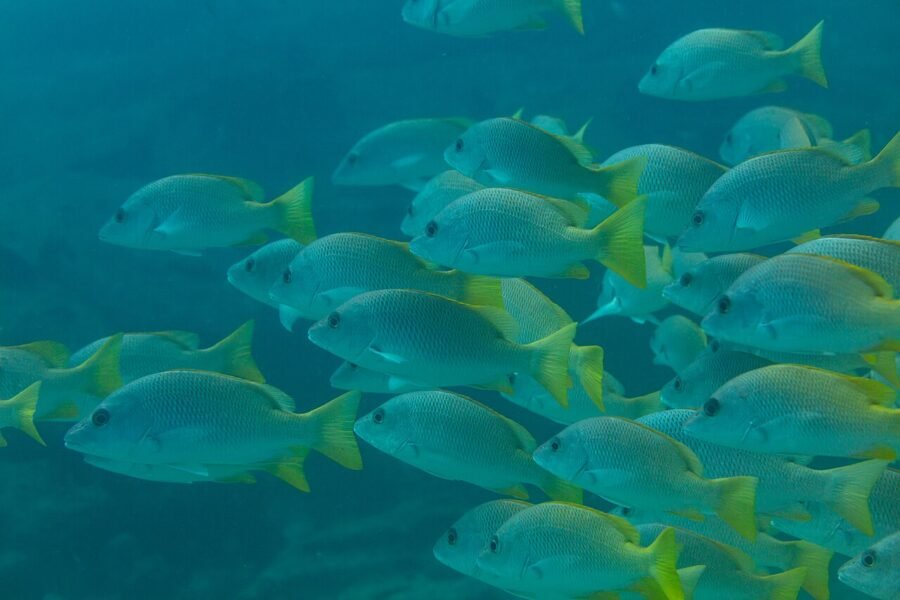
For a diver, the difference is visible. It appears when mooring buoys replace anchors, when guides explain rules and enforce them, when illegal fishing is controlled and when reefs still hold large fish and structure. It is also visible when the park exists but nobody seems to manage it.
Legal declaration, weak budget, little enforcement.
Rules, monitoring, local participation and visible results.
Diving depends on something alive
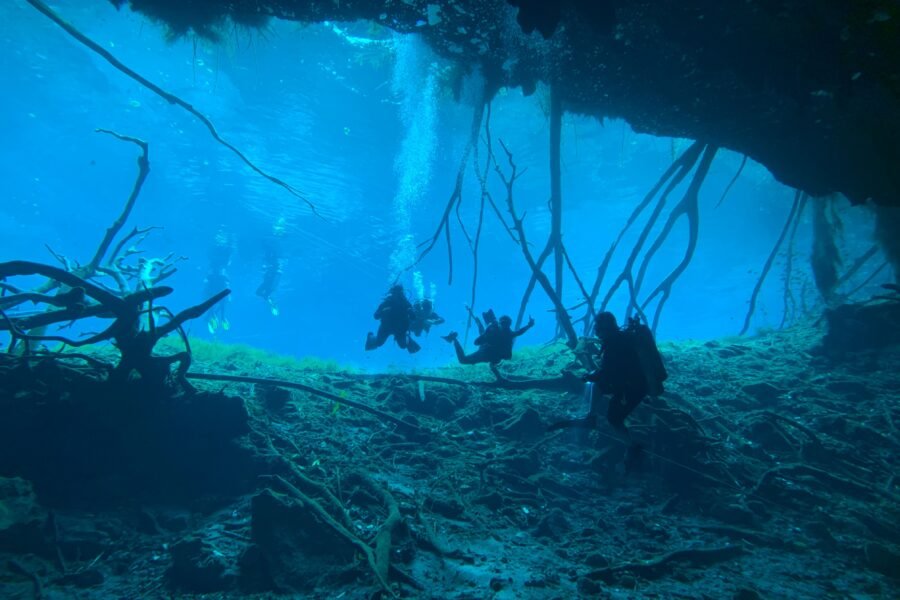
Dive tourism has an uncomfortable characteristic: its main product cannot be manufactured. A center can buy boats, tanks, compressors and computers. It cannot create a healthy reef, a shark aggregation or a clean cave system from nothing.
That is why marine conservation is not a side topic. It is raw material. If the reef degrades, operators lose value. If wildlife disappears, the destination loses appeal. If the water is contaminated, the experience becomes poorer.
From Cabo Pulmo to regional corridors
Cabo Pulmo is often told as a bright story: a fishing community that chose protection and found in tourism a new way to live from the sea. The lesson is not that every community can copy it easily. The lesson is more concrete: a small area, defended seriously and supported locally, can produce ecological recovery and economic value.
In the Eastern Tropical Pacific, conservation is also learning to think beyond national borders. The CMAR corridor connects efforts from Costa Rica, Panama, Colombia and Ecuador around sites such as Cocos, Coiba, Malpelo and Galapagos. Sharks, turtles, rays and whales do not recognize political borders, and conservation cannot treat their routes as isolated dots.
What diving can do
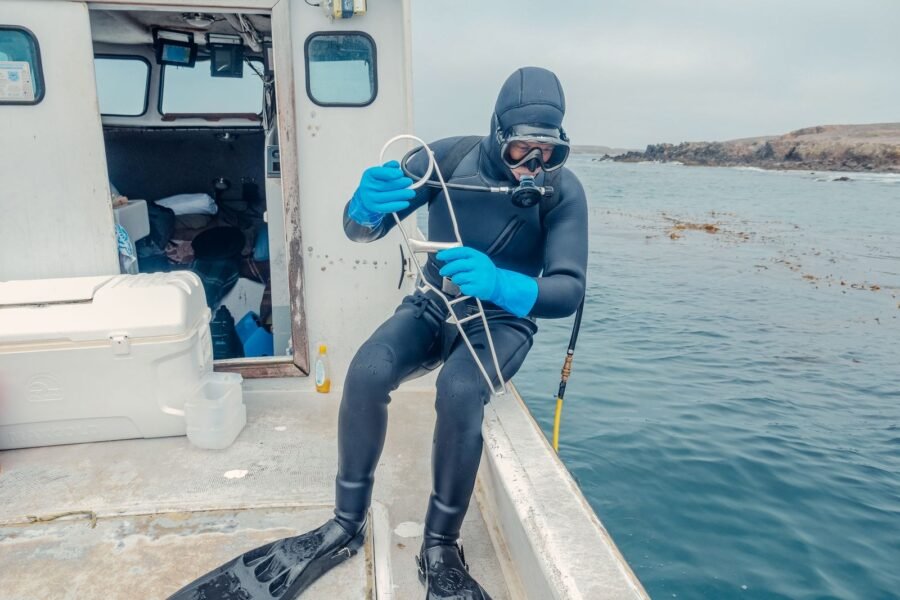
Dive centers are not external observers. They are direct users of the sea. They also see changes before many authorities do: bleaching, trash, ghost nets, anchor damage, missing fauna or saturated sites. That knowledge matters if it becomes organized reporting, better briefings, staff training and respect for limits.
Marine conservation in Latin America will not be won by governments alone, nor by NGOs alone. It needs communities, fishers, scientists, operators, travelers and authorities. For diving, the conclusion is simple: protected areas must be visible not only on maps, but underwater.
Cabo Pulmo and the lesson of community involvement
Cabo Pulmo is often presented as an inspiring story: a community that moved away from fishing toward protection and found in tourism a different way to make a living from the sea. The story is real, but it should not be oversimplified. Recovery was not magic, nor the result of a decree alone. It required local decisions, effective restrictions, protection and time.
Scientific studies documented substantial increases in fish biomass after years of protection. For the community, those changes were more than a graph: they meant work on boats, arriving divers, interested visitors and an identity built around a living reef. The lesson is not that every fishing community can simply copy Cabo Pulmo. Each place has its own pressures. It is that conservation is fragile without local people who believe it is worth defending.
The Eastern Tropical Pacific is thinking in corridors
In the Pacific, Latin American marine conservation is looking beyond national borders. The Eastern Tropical Pacific Marine Corridor links efforts by Costa Rica, Panama, Colombia and Ecuador around Cocos Island, Coiba, Malpelo and Galápagos. The logic is both simple and far-reaching: marine animals do not recognize borders.
Sharks, mantas, turtles, whales and pelagic fish move through routes that cross jurisdictions. Protecting an island helps, but is not enough when corridors between islands remain exposed. Expedition diving depends heavily on encounters with large marine life. If those species are threatened along migration routes, the future of the destination is threatened too.
Revillagigedo and the challenge of protecting remote waters
Revillagigedo presents a different challenge. It is vast, remote and exceptional. Oceanic mantas, sharks, whales and large schools of fish make its distance part of the attraction. But remoteness also makes enforcement difficult. Declaring an area closed to fishing is an important step; making that protection effective requires surveillance technology, patrols, cooperation, sanctions and resources.
Operators working in remote destinations carry a double responsibility. They offer a rare experience while depending on the isolation not becoming neglect. A remote marine park needs an industry that values and explains its protections, rather than treating it as an inexhaustible backdrop.
The cost of protection — and the cost of doing nothing
One common objection to conservation is its cost. Managing reserves, paying staff, buying boats, conducting monitoring, installing mooring buoys and resolving conflicts all require money. That is true. But a failure to protect the ocean also has costs.
Those costs appear in reduced fish populations, erosion, degraded reefs, fewer visitors, vulnerable jobs and coastal communities with fewer opportunities. They often become visible later, when damage is far more expensive to repair.
In many diving destinations visitors pay park or reserve fees without being told clearly where their money goes. That lack of transparency weakens trust. If visitors are being asked to contribute to conservation, there should be visible outcomes: patrols, restoration, monitoring, education and benefits for local communities.
A promise that has to be visible underwater
Latin America has some of the world’s most valuable marine protected areas, but spectacular wildlife alone guarantees nothing. Neither does an official declaration. Every dive depends on decisions made long before a diver boards a boat: coastal planning, fisheries regulation, park fees, visitor education and community participation.
For diving, conservation is not an issue separate from the activity. It is what allows the activity to exist. If Latin America wants to lead underwater tourism, protected areas must become more than names on a map. Their protection must be visible in the water.
Paper park versus effectively protected area
On paper: a decree, boundaries and an entrance fee, but limited monitoring or enforcement.
In practice: rules that are enforced, working mooring buoys, environmental monitoring, local involvement and public reporting.
The difference is not the label on the map. It is what changes in the water.