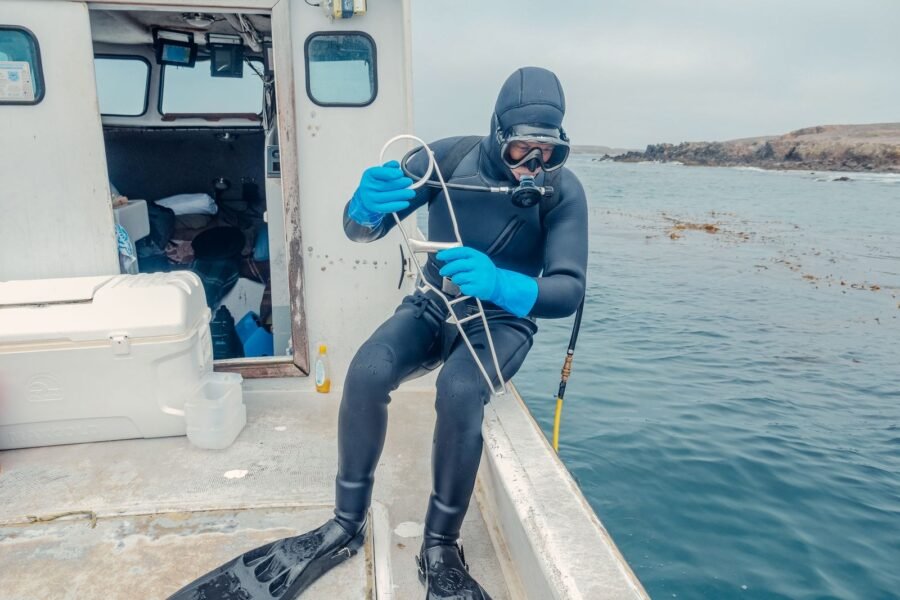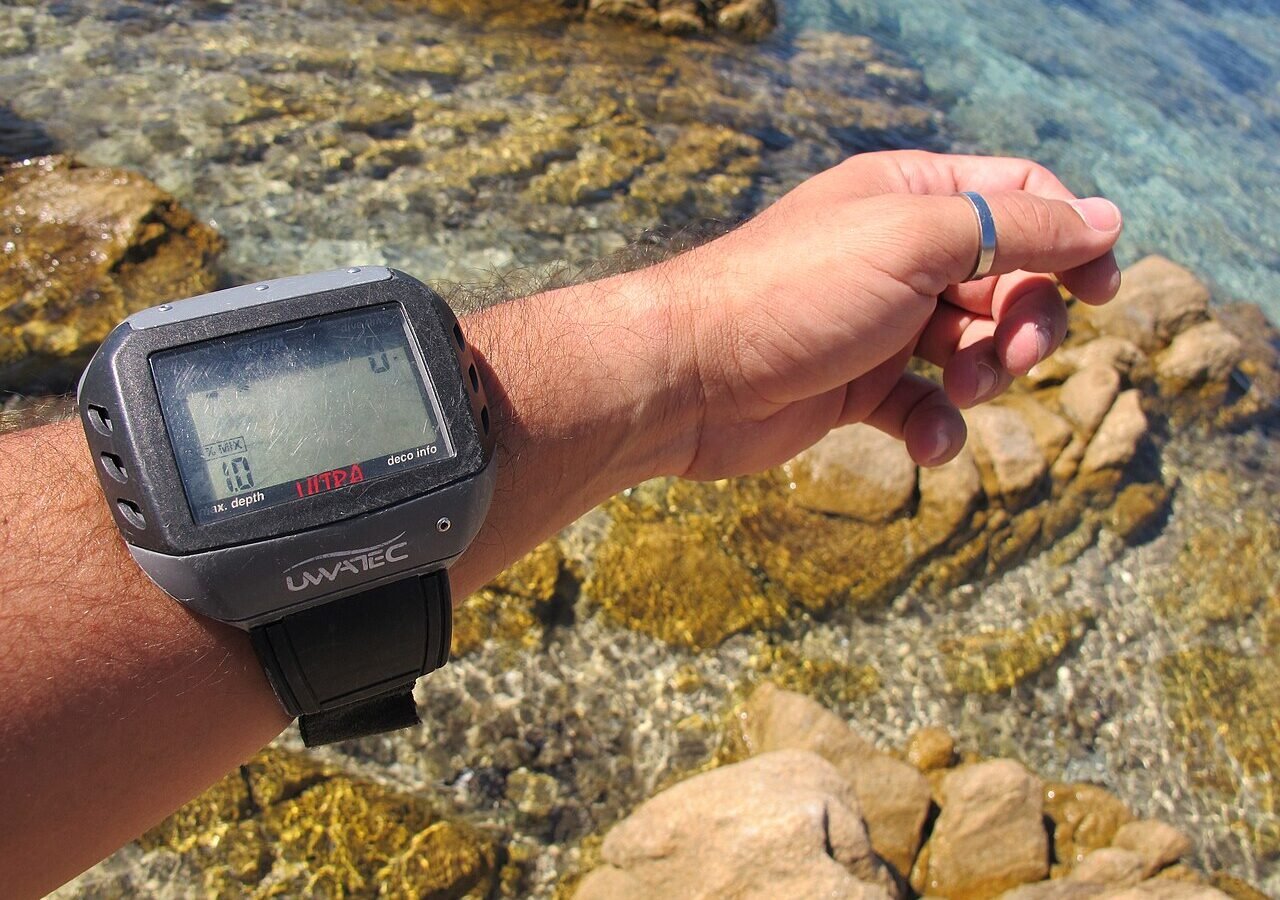
Bright screens, wireless integration and mobile apps attract buyers. But a dive computer should first be judged by its algorithm, underwater readability and real operating limits.
A computer interprets a model, not the diver’s body
On a repetitive dive, a glance at the wrist appears to settle complex questions: how much no-stop time remains, how fast to ascend and what happened during the preceding dive. The screen supplies exact figures, but visual precision does not make the calculation an individual prediction of decompression sickness.
Divers Alert Network explains that algorithms estimate inert-gas uptake and elimination from depth and time. They do not adequately incorporate every personal or environmental variable, including exertion, cold, individual susceptibility or hydration. Staying within the displayed limit helps manage exposure but does not eliminate risk.
Algorithm and conservatism: questions before buying
Some devices allow users to adjust gradient factors; others employ conservatism levels that may be less transparent. A sales claim that a computer is ‘safe’ is not enough. Divers should know which decompression model it uses, how its settings change behaviour and what alerts appear when a limit is exceeded.
When buddies or group members use different settings, they may see different remaining times on the same dive. The group must agree on the profile before entering the water and respect the most restrictive applicable operational limit. Copying an instructor’s settings without understanding them is not a safety policy.
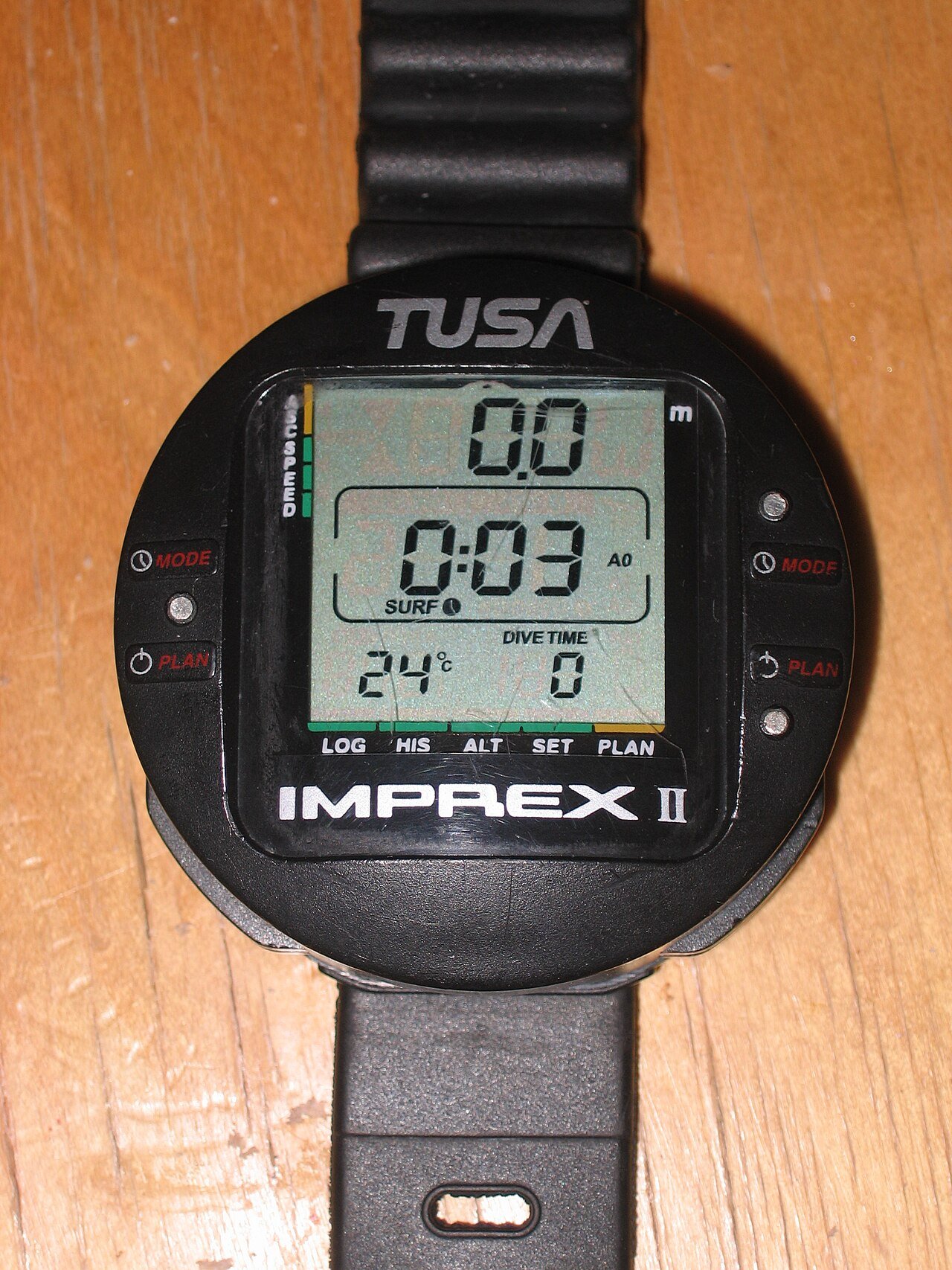
Readability, batteries and use with gloves
The decision looks different under real conditions: murky water, low light, thick gloves, a stop in swell or an alarm that must be interpreted immediately. Large numbers and a clear information hierarchy can matter more than the number of colours on the interface.
Battery life and replacement options, memory, dive logs, charging and access to critical menus also deserve attention. On a multi-day trip, a forgotten charger or incompatible sensor may matter more than a function used only at home. Phone connectivity can simplify record-keeping, but it does not replace proper dive planning.
Air integration does not replace independent checks
Wireless pressure readings offer an operational advantage: checking gas supply without bringing a console into view. Some models also estimate consumption and remaining gas time. However, the electronic link, transmitter battery and displayed information form a chain that can fail.
Before buying, check compatibility with the regulator first stage, management of multiple transmitters and the backup available if the signal is lost. In advanced or technical diving, redundancy does not disappear because a wrist computer is more sophisticated. The correct configuration depends on training and the dive plan.
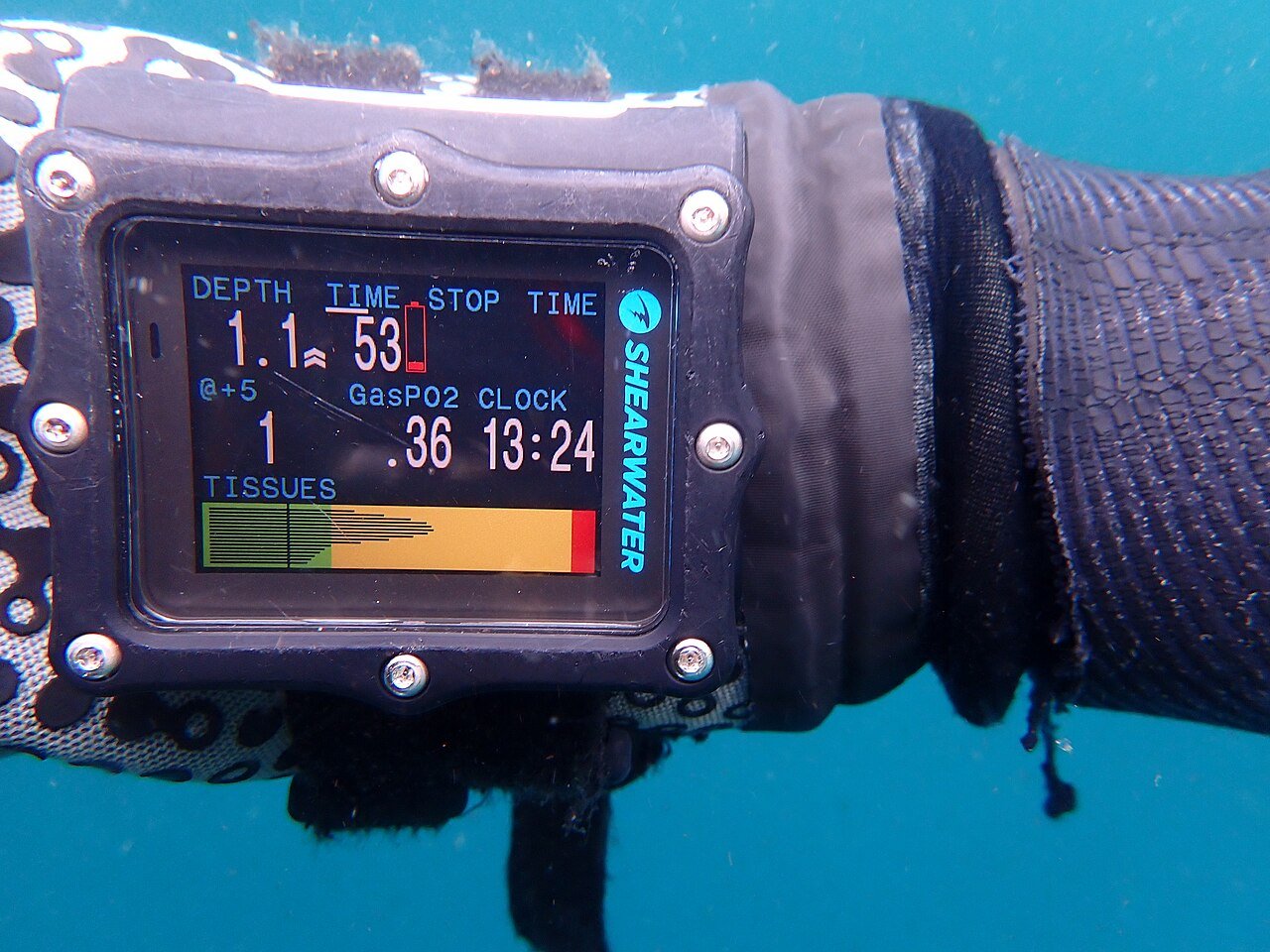
For dive centres, standardisation matters
A centre renting computers needs a functional inventory, manuals, maintenance records, consistent settings and a short user briefing. It should not hand out a device with a low battery or set for a breathing gas different from the diver’s cylinder. Staff training includes recognising unexpected readings and applying established procedures.
In 2026, no screen can rescue poor planning. A good instrument supports better-informed decisions; its usefulness depends on divers understanding both what it displays and what it cannot know.
Sources
DAN: gradient factors · DAN: defensive profile planning · PADI: choosing a dive computer · DAN: when a computer fails