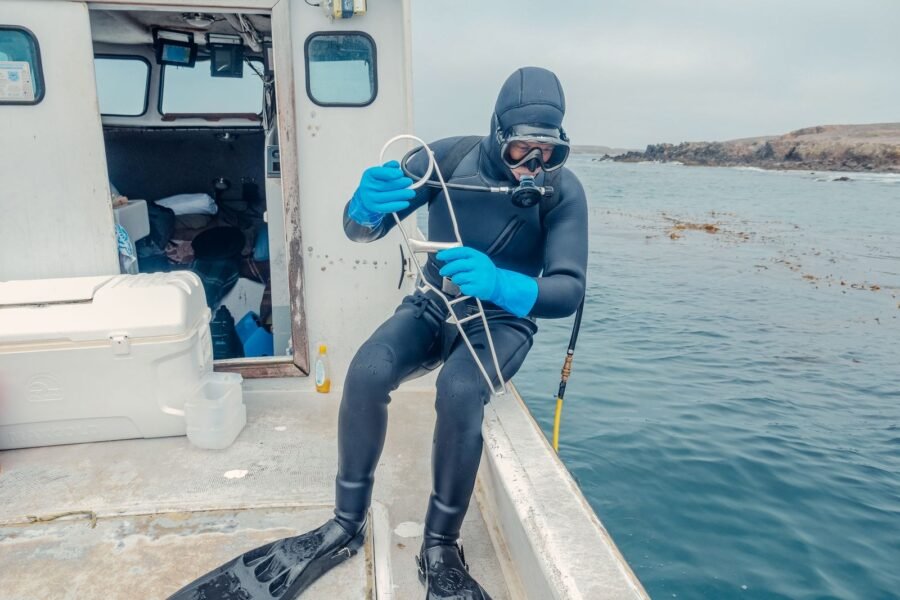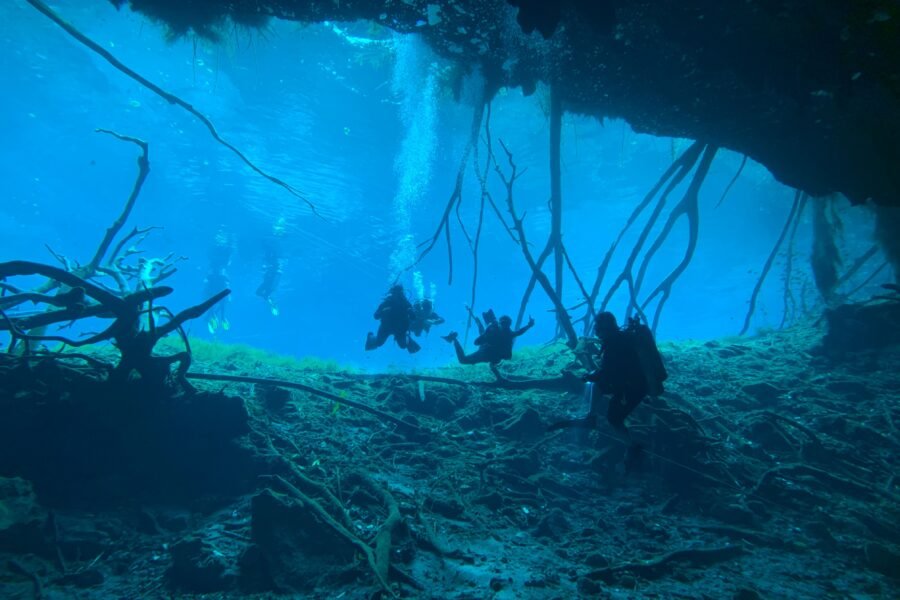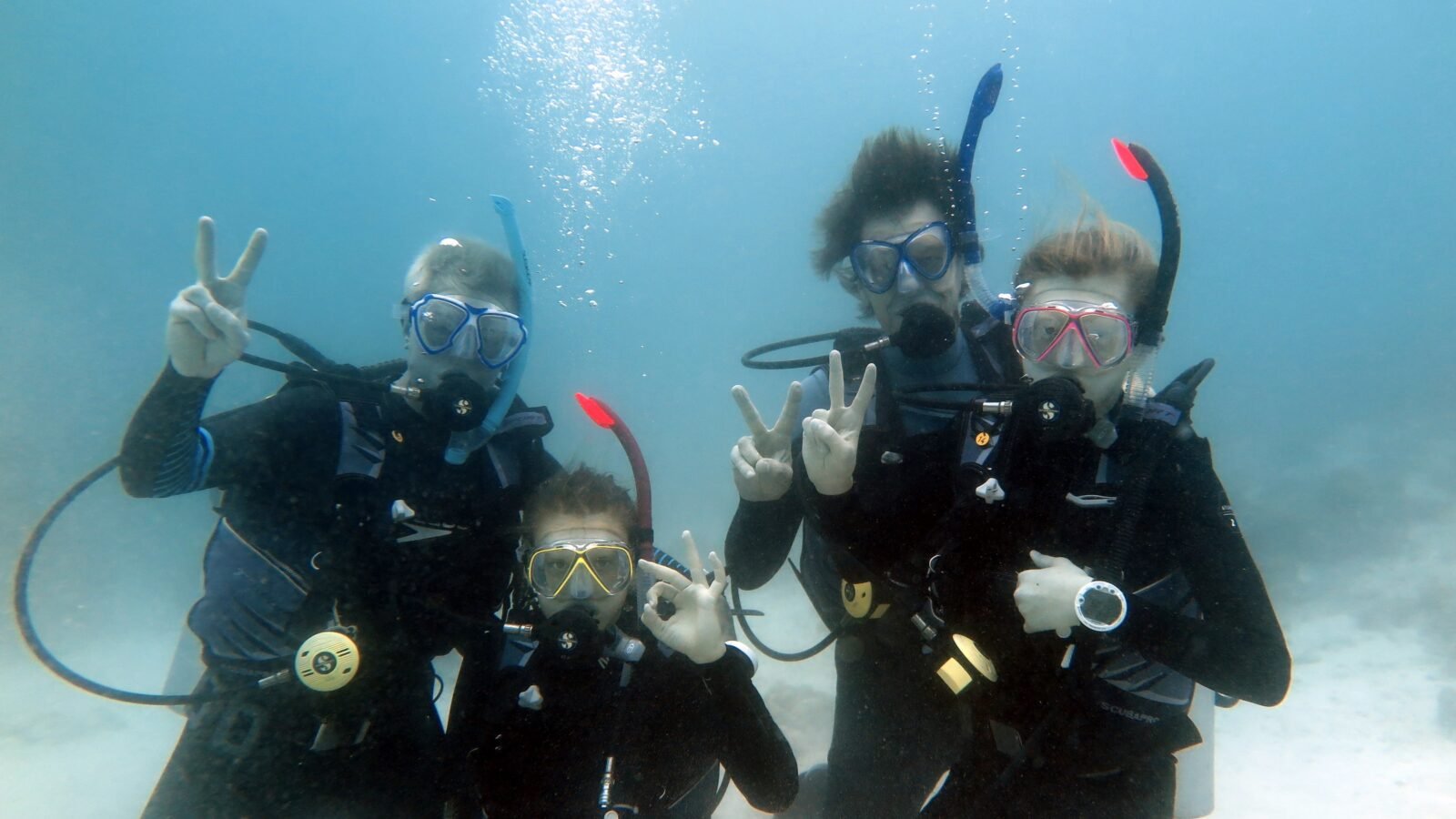
Most divers remember their first certification through very concrete sensations: the weight of the gear, the first breath underwater, the nerves of mask removal, the instructor watching closely and the card that arrives at the end as proof that something changed. Behind that personal moment is a growing global market, but reading it only as course sales misses the point.
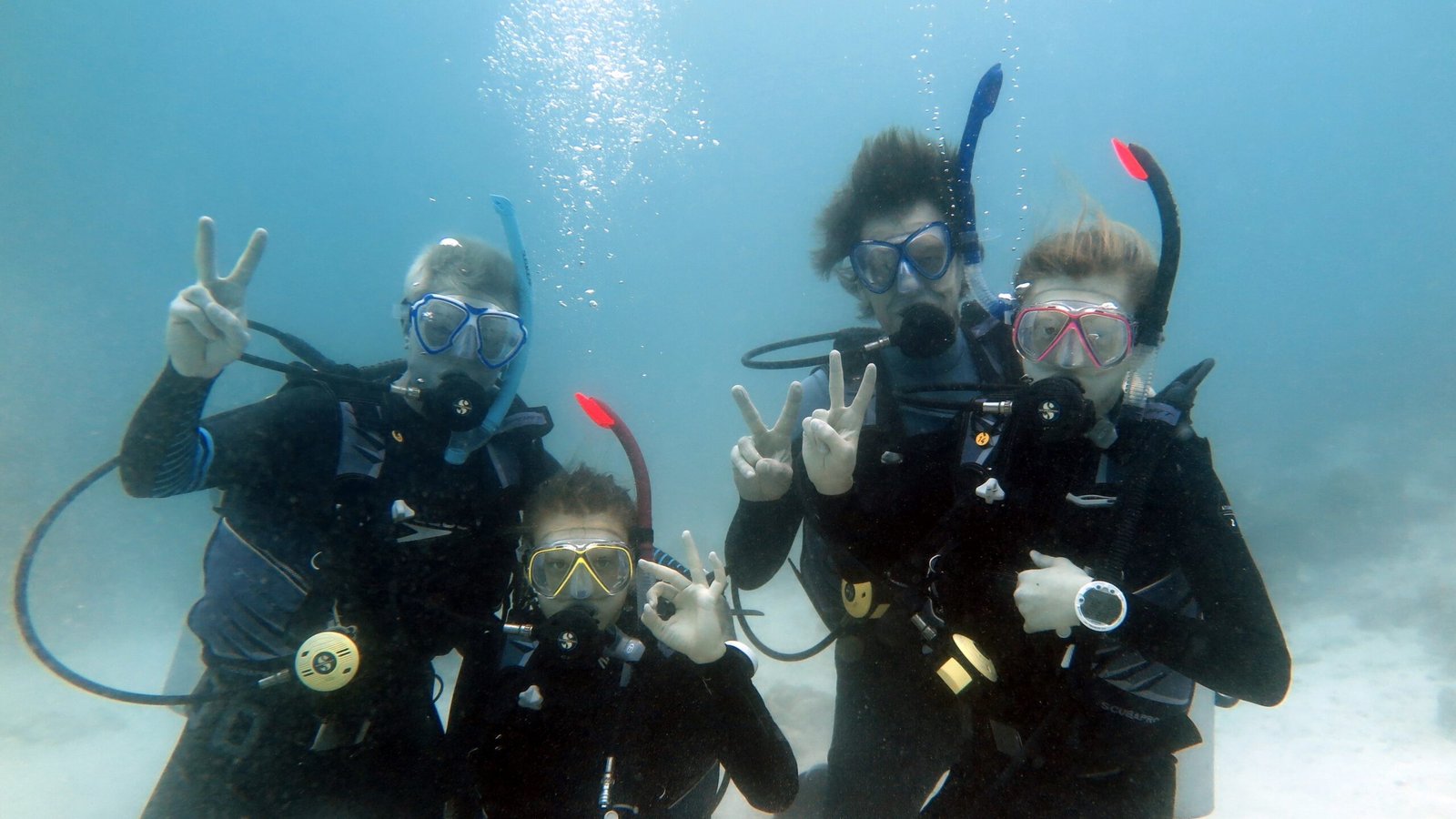
The certification card matters, but the real business begins after the first course: retention, practice, continuing education and community.
For a dive center, the Open Water course can look simple: theory, confined water, open water dives and certification. In practice, it is much more. It is the entrance to a relationship that may last for years or end the same day the student receives a credential.
The card matters, but it is not enough
International training agencies built much of their strength on a simple promise: a recognized certification allows divers to continue diving elsewhere. For students, that reduces uncertainty. If they certify in Mexico, Colombia or Brazil, they want that credential understood in Cozumel, Roatan, Galapagos or Thailand.
PADI reports more than 30 million certifications since 1967 and a global network of centers and professionals. SSI also operates internationally, while CMAS works through a federative model. These figures show scale, but they do not automatically explain training quality.
Entry point, not the end.
Confidence grows in the water.
Nitrox, rescue, photo, specialties.
The reason many divers return.
The student buys trust
Choosing where to certify is not like buying a visible product. Before the course, the student cannot fully evaluate whether the instructor will be patient, demanding, clear or careless. That is why reputation matters. The agency brand helps, but it does not replace the instructor.
In Latin America, this difference appears every day. There are instructors working with real seriousness, often with limited resources and strong vocation. There are also rushed courses, aggressive discounts and operations that treat certification as a tourist transaction.
The real business begins after Open Water
The value appears later: Advanced, Nitrox, Rescue, photography, cenotes, wrecks, travel, first equipment purchases and monthly dives. A good school does not only certify. It accompanies the new diver, shows what to do with that credential and helps them choose experiences suited to their real level.
The market will keep growing. The question is what kind of divers that growth will leave behind. If it produces quick cards, the industry gains little and risks a lot. If it produces safer, more active divers connected to destinations, Latin America can capture real value.
Digitalization changed the first contact
In the past, many students walked into a dive center or arrived through personal recommendations. Today, they often decide after reading reviews, watching videos, comparing prices, checking availability and messaging instructors on social media. The decision starts on a phone.
A newcomer wants to know how long the course lasts, what is included, which languages are spoken, what happens if equalization becomes difficult, whether theory can be completed online, how large the group is, which credential they will receive and what they can do afterward. When those answers are unclear, price becomes the only basis for comparison.
Digital learning has also changed the process. eLearning allows students to study theory before reaching a destination and dedicate more of their trip to practical training. But it can weaken learning if used as a shortcut. Online lessons cannot replace conversation, practice, feedback and judgment.
A new generation of divers
Students can no longer be imagined as a single kind of adult, technically inclined male adventurer. More women, younger people, couples, solo travelers, families and people interested in conservation or photography are entering the sport. That diversity changes how diving should be taught.
Some students need emotional support more than technical explanation. Others arrive with swimming or freediving experience. Some are anxious; others want to advance quickly despite not yet mastering the basics. Modern teaching means understanding the person, not merely ticking off skills.
Latin America has an opportunity here. Warm waters, accessible reefs, cenotes, protected areas, hospitality and experienced operators make many regional destinations attractive for beginners. That advantage is wasted when education is presented as a generic course.
More certifications do not automatically mean better divers
Market growth brings an uncomfortable warning. Issuing more certifications is not the same as providing better training. International standards define a minimum: a floor, not a ceiling. A serious center should ask what it offers beyond that minimum: more practice, stronger briefings, smaller groups, follow-up, a safety culture and honest assessment.
Diving needs new students, but not poorly prepared ones. A certified diver without buoyancy control may damage coral. Someone who does not understand gas consumption can put their buddy at risk. A person unable to recognize personal limits can turn a recreational dive into an emergency.
Responsibility does not belong to the student alone. It also lies with the system that trained them, the instructor who signed them off and the center that decided whether learning or turnover came first.
Latin America can train better, not merely sell more
Mexico, Honduras, Colombia, Brazil, Ecuador, Costa Rica, Panama, Argentina, Chile and Peru have different markets, yet each can develop diving education with a distinct identity. Not every approach needs to imitate the largest tourist hubs.
Some destinations can specialize in training recreational vacation divers. Others can focus on technical diving, cold water, citizen science, conservation, photography, caverns or professional development. Not all courses should be marketed as though they are interchangeable.
The certification market may continue to expand. The real question is what kind of divers that expansion will produce. If the outcome is only a larger number of rapidly issued cards, the industry gains little and risks much. If it develops safer, active divers connected to their destinations, the region can create lasting value.
Certification should not feel like the end of a transaction. It should feel like the beginning of a life underwater. When that happens, students, training centers and the ocean all benefit.
The value chain of a certification
First course → guided dives → continuing education → travel and equipment → an active diving community.
A certification has more value when it becomes a starting point rather than a final sale.