Editorial note (5 November 2026): this article was originally published on 4 November. It is filed under 2 November, the date of the regulation’s resubmission. The archive date is not its original publication date.
Chile’s government has resubmitted the regulation implementing Law 21,789 to the Comptroller General. The draft addresses work organisation, safety teams, company responsibilities and emergency response. While approval remains pending, official accident figures draw renewed attention to commercial divers’ working conditions.
4 November 2026 | Diving LATAM Newsroom | Industry and occupational safety
Chile is considering additional safety rules for professional underwater work, an activity essential to aquaculture, maritime structures and industrial maintenance. On 2 November 2026, the Ministry of Labour and Social Security resubmitted Decree No. 74/2026, the proposed regulation on working conditions, health and safety in diving and related activities, to the Comptroller General for review.
The draft was first submitted in July and withdrawn in August. Its renewed submission is a procedural step, not final approval. As of 4 November it remained under review. The case status and submitted draft are available for consultation.
The stakes extend beyond administration. Safe commercial diving depends not only on an individual diver’s skills, but also on how each operation is contracted, planned, supervised, equipped and supported.
Accident statistics demand scrutiny
According to Chile’s maritime authority DIRECTEMAR, as cited by the Social Security Superintendent (SUSESO), 288 divers were involved in accidents during salmon-farming operations between 2004 and May 2026. Nearly half experienced serious accidents, and 18% of those recorded as accident victims died. SUSESO also stated that 12 diver deaths had been recorded during 2026, three directly at fish-farming sites.
Those numbers require exact interpretation. The 18% is not the mortality rate for all professional divers in Chile. It is the share of deaths among the accident cases recorded for the specified work and period. Similarly, the 12 reported deaths during 2026 must not be presented as fatalities occurring exclusively at salmon farms.
Underwater work in salmon farming includes inspecting and maintaining nets, moorings and structures. It can involve cold water, currents, low visibility and significant distances from emergency services. The physical hazards combine with organisational factors: equipment condition, exposure limits, communication, supervision, rescue capacity and pressure to complete a task. Accidents have multiple possible causes; responsible prevention requires incident investigation, not speculation about a single culprit.
A law in force, a regulation still pending
Law 21,789 was published on 20 January 2026 and took effect on 1 July. It established a specific employment-contract framework for diving and related activities within Chile’s Labour Code.
The law addresses work with air diving, surface-supplied or autonomous equipment in aquaculture, salmon farming, industrial maintenance and other covered activities, including work in reservoirs, pools and industrial sites. Recreational, sporting and personal-subsistence activities, along with personnel from the armed forces and security services, are excluded.
Article 145 bis B refers to further regulation of licences, personal protective equipment, safe procedures, safety staffing, working time, rest and emergency coordination for decompression incidents. Until the regulation is approved and published, measures contained only in the draft are not themselves binding new regulatory requirements. Chilean maritime technical rules enforced by DIRECTEMAR also remain relevant and are not automatically replaced by labour legislation.
What the draft proposes
The submitted Decree No. 74/2026 describes a diving-specific occupational health and safety management approach. Article 13 includes risk assessment, preventive planning, defined responsibilities, work procedures, equipment maintenance, training and emergency preparedness.
Supervision and safety staffing
Article 24 envisages a dive-team arrangement including a diving supervisor, a standby emergency diver and surface support. Staffing should reflect the type and depth of work, diving method and risk assessment. Articles 25 and 26 describe tasks and availability; the standby diver must be able to respond rather than simultaneously carrying out unrelated duties that would compromise intervention.
Planning, monitoring and rest
The draft addresses pre-dive checks of qualifications, fitness, equipment, environmental conditions and evacuation arrangements. During operations it describes surface supervision, communication and recording of depth and time against decompression procedures. Post-dive monitoring and rest intervals also feature. None of this should be understood as a universal rest period that removes decompression risk; details depend on the work profile, technique and applicable rules.
Emergency response and hyperbaric care
The proposal considers stabilisation, evacuation and access to hyperbaric facilities when appropriate. Article 24 also addresses hyperbaric-chamber resources and personnel under specified conditions for work deeper than 40 metres. Having a chamber on a map, however, is not proof of effective emergency preparedness: response time, medical availability, communication and coordination must be realistically tested.
Records and traceability
The legal framework requires records of dives, while the draft develops controls on teams, equipment, hazards and incidents. Reliable documentation can reveal exposure patterns and help inspections. Digital records alone do not demonstrate that unsafe practices have been corrected.
Responsibility extends to the contracting company
A commercial operation may involve a principal client, a specialised diving contractor and several support providers. Responsibilities for verifying qualifications, equipment, supervision and rescue resources must be allocated before work begins. Someone must also have clear authority to stop the operation when conditions change.
Both the law and the draft address duties of employers and principal or user companies. Safety should be part of service evaluation and procurement, not treated as an optional expense once the work is underway. In October, SUSESO also reported a national working group examining better practices in rest, training, equipment, hazards, emergencies, hyperbaric access and diving contractors.
What Latin American commercial diving can learn
The Chilean case has relevance to contractors in Mexico, Brazil, Argentina, Colombia, Peru and elsewhere, but Chilean legal requirements cannot simply be transplanted to other jurisdictions. The transferable questions are operational: who assumes responsibility, is supervision competent, is a standby diver available, are depths and times recorded, and will the emergency response actually work?
There is an economic implication as well. A low-cost bid that omits appropriate staffing, maintenance, emergency measures or rest may appear competitive while failing to support a safe operation. Price cannot substitute for a technical risk assessment.
Implementation will determine the results
Resubmission of Decree No. 74/2026 is not the end of the process. Approval, official publication, the final wording and implementation measures still require verification. Nor can a reduction in accidents be presumed merely because a rule is adopted; comparable records, investigations and evidence of on-site compliance are needed.
Commercial diving safety begins before the diver enters the water: when work is planned, responsibilities assigned and emergency resources made available.
Sources and documents
- Chile’s National Congress Library: Law 21,789.
- Comptroller General: submitted Decree No. 74/2026.
- Regulatory case tracking.
- SUSESO, 20 October 2026.
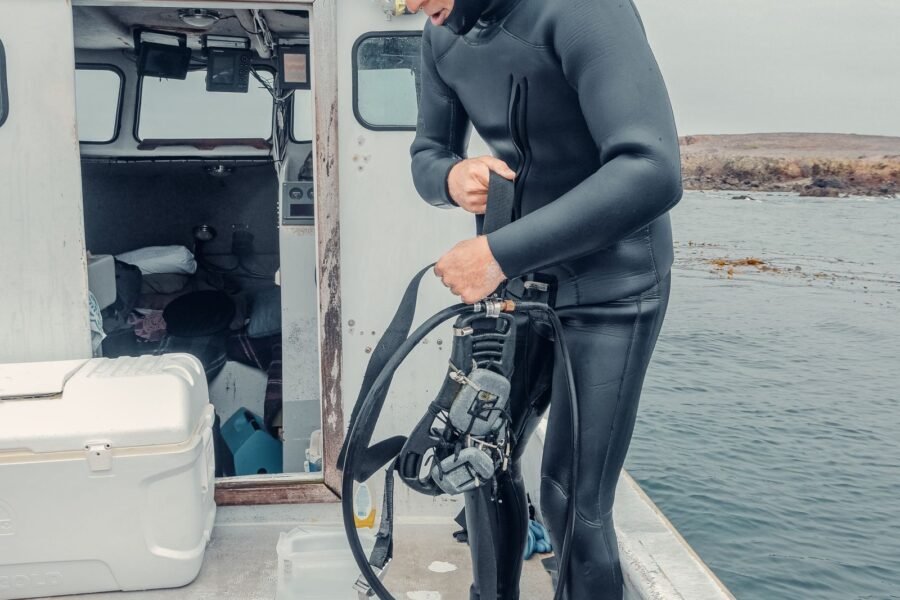
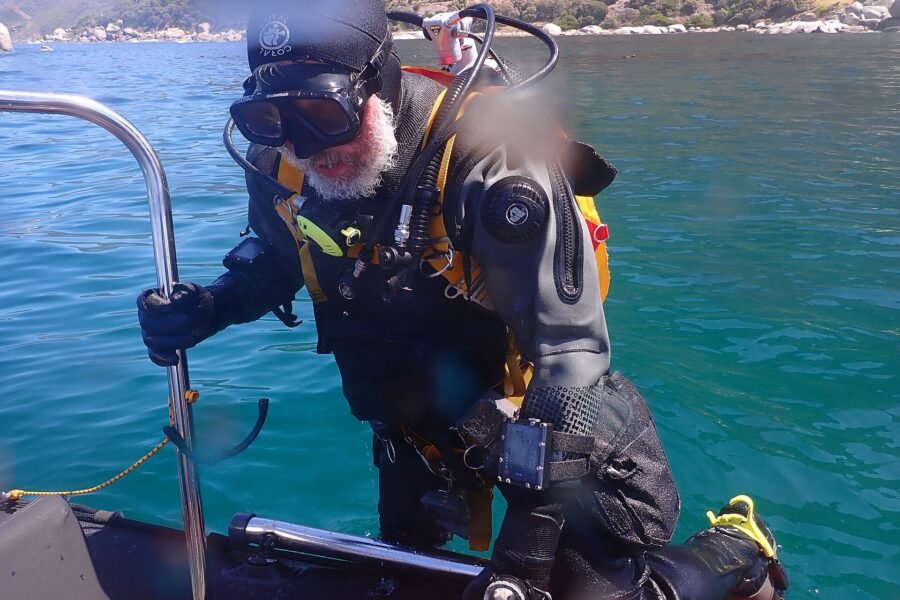
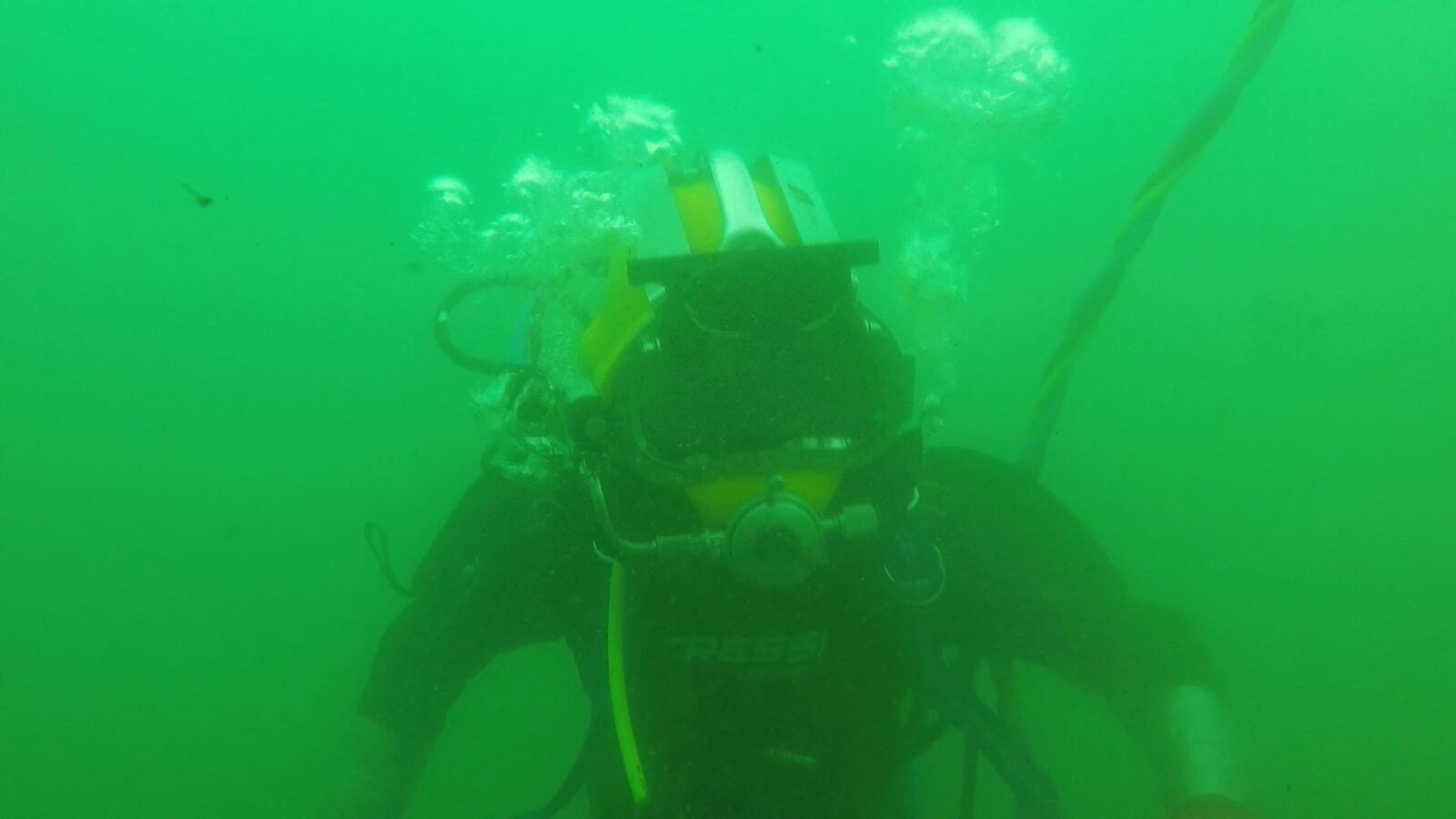
Editorial note: information checked as of 4 November 2026. The decree was still under review. Featured image is illustrative of professional diving and does not document a Chilean incident. Victorurain / Wikimedia Commons, CC BY-SA 4.0.