Editorial note (5 November 2026): this analysis is published on 5 November and covers an IMCA technical update released on 3 November.
IMCA has released revision 1 of its D061 guidance on underwater currents and diver safety. The update covers loop currents, solitons and monitoring technologies, with implications for the planning and control of commercial diving operations.
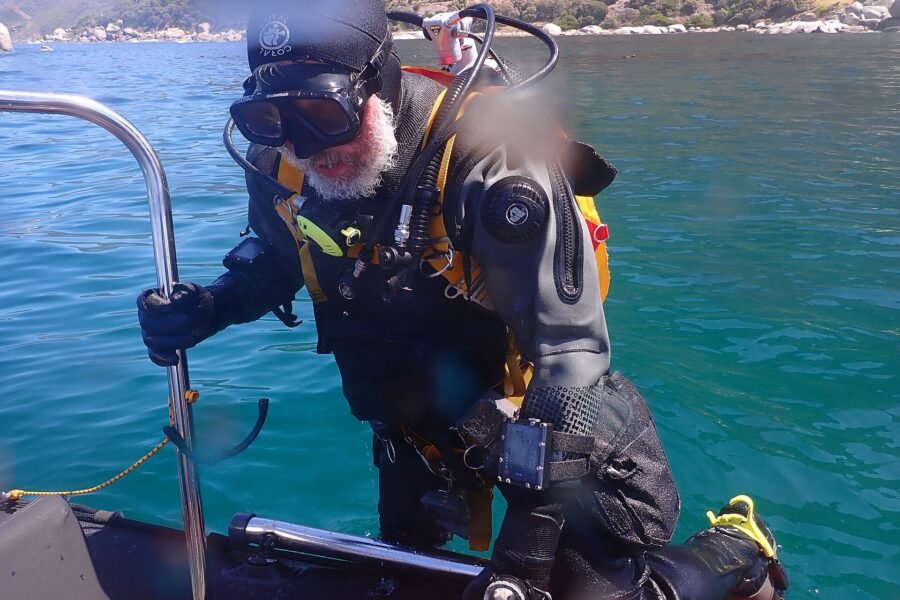
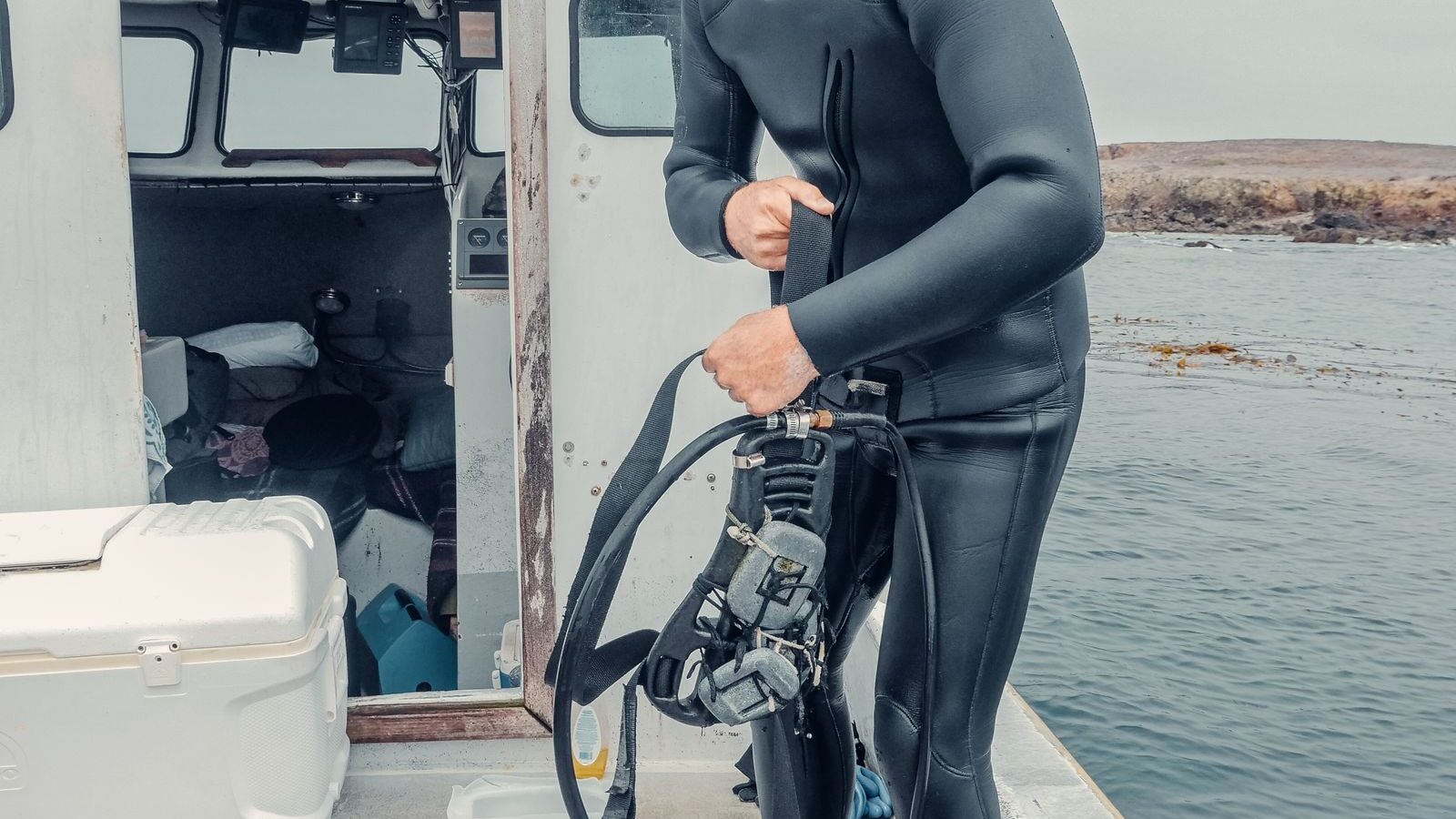
Diving LATAM Newsroom | Commercial diving safety. Illustrative archive photo of equipment checks on deck; not an IMCA field operation. Photo: Kindel Media / Pexels.
Currents can make an underwater job unsafe even when the weather forecast appears benign. Surface conditions do not necessarily represent flow at working depth, and short-term changes may affect diver movement, umbilical tension and rescue options. This makes the 3 November 2026 update of IMCA D061, The effects of underwater currents on diver performance and safety particularly relevant.
The International Marine Contractors Association labels the document revision 1, November 2026. Its public summary confirms expanded coverage of loop currents, solitons—internal waves capable of producing rapid changes in flow—and current-monitoring technologies. The purpose is to support risk assessment of hydrodynamic conditions affecting commercial diving performance and safety.
Operational limits are not simply about diver strength
Strong water movement can increase exertion, impair orientation, shift a diver away from the intended worksite and change loads on umbilicals, equipment and tools. Inspection, construction or maintenance tasks can amplify the consequences. A diver’s willingness or ability to continue is therefore not an adequate decision criterion by itself.
The supervisor needs documented operating criteria, clear stop-work authority and a workable recovery plan under actual environmental conditions. Assessment should address task duration, complexity, depth, access and escape routes, equipment characteristics and available emergency resources.
Why the new sections matter
Loop-current systems and internal solitons can create variations in current direction and speed at different depths. They cannot be assessed reliably from surface appearance alone. Measurements near the working level and appropriate local oceanographic information can therefore be decisive.
Importantly, the updated guidance does not justify inventing one current-speed threshold for every diving task. Operating limits depend on the work, system configuration, assessment and applicable contractual rules. The public IMCA page does not provide numerical thresholds, so none are attributed to the document here without access to the full text.
Monitoring must lead to action
Acoustic Doppler current profilers and deployed sensors can produce information through the water column. But instruments do not replace supervision. Sensors need correct placement, maintenance and interpretation; the dive plan must specify what happens when conditions change or alerts are triggered.
Recording differences between forecast and observed conditions, communication pathways and the authority to suspend work is as important as installing a new device. An alarm that does not affect operational decisions offers little protection.
Relevance for Latin America
These issues apply to offshore installations, ports, coastal structures and other dynamic underwater worksites. Mexico, Brazil, the Caribbean and the Pacific have very different local conditions, and current profiles should never be imported uncritically from another region.
Training providers and contractors can use the update to ask a practical question: does the dive plan use site-specific information, identify decision-makers and provide a realistic way to stop and recover the operation? IMCA guidance is recommended practice, not universal law; its use must be reconciled with national and contractual requirements.