Editorial note (5 November 2026): this article was added to Diving LATAM today and filed under 3 November, the date of the reported event or original announcement. The archive date is not the actual publication date.
Norway has opened a second public consultation on NORSOK U-100:2026, a standard covering diving operations in the petroleum industry. Comments are due by 18 November. The process offers lessons for Latin American contractors and training providers, but does not itself change regional laws.
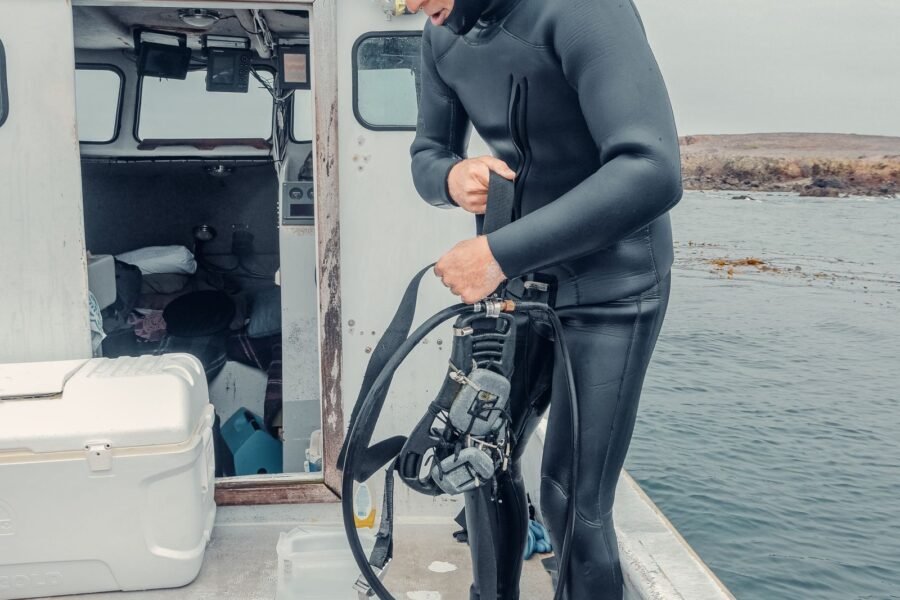
Norway | Diving LATAM Newsroom. Archive image illustrating diver recovery aboard a vessel; not a Norwegian operation. Photo: Pbsouthwood / Wikimedia Commons, CC BY-SA 4.0.
Offshore diving standards become particularly visible when a client asks a contractor to demonstrate competence or when a supervisor must explain the basis for an operational decision. In that setting, Standards Norway announced on 3 November 2026 that the draft prNORSOK U-100:2026 Diving Operations is open for a further round of public enquiry. The deadline for comments is 18 November 2026.
The standard sets basic requirements for personnel, equipment and systems used in petroleum-industry diving operations. Its principal scope covers diving down to 180 metres of seawater (msw); operations deeper than this require special consideration, assessment and risk-reduction measures. That number describes the scope reported by the standards body. It is not a universal commercial-diving depth limit for every country or type of work.
Why a second consultation?
Standards Norway explains that an amendment to NORSOK U-100:2023 was developed and placed on enquiry from December 2025 to February 2026. Because the changes were extensive, the consolidated document was submitted for another public review. This is a second consultation round—not confirmation that a final 2026 edition has been approved or entered into force.
The official enquiry portal identifies the proposal as open until 18 November. Reading the complete draft and submitting comments requires signing in. Consequently, provisions that are not publicly visible in the announcement should not be attributed to specific draft clauses without examining the full text.
What Latin American operators can examine
An offshore standards debate offers an opportunity to test internal management systems: how personnel competence is established; who verifies gas supplies and diving equipment; what records are retained; how hazards are assessed; and how a supervisor decides to stop work. These are meaningful audit questions regardless of the final wording adopted in Norway.
Brazil and Mexico host marine industrial operations involving international operators and contractors. Some contracts may refer to foreign technical standards. Such references do not replace applicable maritime and labour requirements in the country concerned. Similarly, recreational diving qualifications cannot simply be treated as authorisation for professional underwater work.
Training must reflect operational responsibilities
For diver-training institutions, the important distinction is between teaching an underwater task and demonstrating competence to perform it safely within a controlled operation. Employers may examine documented experience, supervision arrangements, maintenance, emergency procedures and management of change. A school claiming to align with an international standard should specify the document, edition and scope rather than implying automatic recognition.
What happens next?
This enquiry creates an opportunity for technical input; it does not establish immediate new obligations. The next substantive story will be the final text and a documented comparison with NORSOK U-100:2023, including its adoption and effective status.
For Latin America, the most useful question is practical: can contractors show precisely who makes safety-critical decisions and what evidence supports them before a diver enters the water? That question matters more than portraying a foreign standard as a universal solution.