During the United Nations Biodiversity Conference, a new initiative seeks to connect marine conservation efforts across the Greater Antilles. The announcement comes at a time when the world faces a significant challenge: approximately 10% of the ocean is designated as protected or conserved, but only 3.5% meets the levels of protection considered high or fully protected in a recent assessment. For Latin America, the challenge will be turning international cooperation into verifiable results underwater.
The ocean has no visible borders. Currents transport nutrients between countries, sea turtles travel great distances, and numerous migratory species depend on habitats located under different jurisdictions.
Nevertheless, marine conservation is still organized, to a large extent, within the administrative boundaries of individual territories.
For decades, governments and environmental organizations have established marine parks, reserves, and other areas intended to conserve biodiversity. Many represent important progress. But the existence of a protected area does not guarantee that its ecosystems are recovering or that threats have disappeared.
This distinction occupies a central place at the Conference of the Parties to the Convention on Biological Diversity (COP17), taking place in Yerevan, Armenia, from October 19 to 30, 2026.
On Thursday, October 29, the United Nations Environment Programme (UNEP) included a session on regional cooperation to achieve Target 3 of the Kunming-Montreal Global Biodiversity Framework, known as 30×30.
The international objective is to conserve and effectively manage at least 30% of terrestrial and inland water areas, as well as marine and coastal areas, by 2030.
The challenge is no longer simply to increase the amount of protected territory, but to demonstrate that these measures deliver lasting results.
The Gap Between Declaring Protection and Achieving Results
The Ocean Protection Gap Report 2026, published in September, presents an assessment of global progress toward the 30×30 target.
Its conclusions reveal a considerable gap.
Approximately 10% of the ocean is designated as protected or conserved. However, the study estimates that only 3.5% is subject to full or high levels of protection, used as an approximate indicator of effective protection.
This difference requires explanation.
A marine protected area may permit certain human activities depending on its category, objectives, and regulations. Allowing compatible uses does not necessarily mean that an area is poorly managed.
Conversely, a legally protected area may lack the surveillance, personnel, resources, or mechanisms needed to ensure that its objectives are met.
The report uses fully or highly protected areas as a proxy for measuring effective protection. Therefore, the 3.5% figure should not be interpreted as an individual assessment of how every marine protected area in the world is managed.
It is a measure of protection based on a specific criterion, more demanding than the simple legal recognition of a territory.
Even with this limitation, the gap between the two figures reflects a fundamental issue: the area officially designated as protected and the conservation actually achieved are not equivalent.
For diving destinations, this difference appears in very concrete conditions. A park can exist on maps while simultaneously facing pollution, damage caused by vessels, tourism pressure, or insufficient enforcement.
Conservation requires appropriate rules, compliance, community participation, and ecosystem monitoring.
The Caribbean Presents a Plan to Connect Its Marine Areas
Against this backdrop, the Caribbean Biological Corridor 30×30 Plus Marine Action Plan was announced during COP17 on October 27, an initiative aimed at strengthening cooperation in the conservation of marine ecosystems across the Greater Antilles.
The plan was presented by the Caribbean Biological Corridor (CBC), with technical support from conservation organizations and the participation of government representatives from the region.
The corridor brings together efforts associated with territories such as Cuba, Haiti, the Dominican Republic, Jamaica, and Puerto Rico.
Its proposal begins with an ecological reality: many marine ecosystems and species are connected, even when protection measures have been developed separately.
The plan seeks to facilitate cooperation among jurisdictions, identify areas of shared ecological importance, and move toward coordinated management of marine areas and migratory corridors.
Its objective is to overcome one of the common limitations of conservation: protecting individual sites without sufficiently addressing the ecological processes that connect them.
For species that move between different territories, isolated protection may be insufficient when their routes cross waters exposed to different pressures.
The initiative includes scientific cooperation, institutional coordination, and potential financing mechanisms suited to projects involving more than one country.
A scientific expedition planned for 2027 was also announced, intended to generate baseline information that could support future regional conservation proposals.
However, it is important to distinguish the scope of the announcement.
The launch of the plan does not amount to the immediate creation of new marine protected areas, does not guarantee funding, and does not automatically change national regulations.
Its value will depend on the commitments that are actually implemented, the resources available, and the ecological results that can be documented.
COP17 Focuses Attention on Regional Cooperation
The session convened by UNEP for October 29 is titled From Regional Action to Global Targets: Regional Seas Delivering on GBF Target 3 (30×30) from Coast to High Seas.
Its agenda addresses the role of regional agreements, the management of marine protected areas, and other effective area-based conservation measures, known as OECMs.
These measures make it possible to recognize places outside traditional protected-area categories when their management produces positive and sustained benefits for biodiversity.
Conservation does not necessarily have to take place under a single legal framework.
It can involve different models of governance and participation, provided that there are verifiable environmental objectives and appropriate measures to maintain them.
The meeting also addresses ecological connectivity, technical capacities, and financing, as well as the relationship between protection efforts within national waters and conservation on the high seas.
This latter issue has gained importance with the development of the international agreement on marine biodiversity in areas beyond national jurisdiction, known as the BBNJ Agreement or High Seas Treaty.
Cooperation between countries is particularly relevant in a region such as Latin America, where some of the most important marine ecosystems and species migration routes are distributed across several jurisdictions.
However, international initiatives must subsequently be translated into concrete implementation mechanisms.
A conference can establish commitments, present cooperation instruments, and generate political agreements. Effective conservation is measured afterward, on the ground and in the water.
As of October 29, the sources reviewed document the session agenda and the launch of the Caribbean plan, but they do not support attributing to that meeting a new binding decision that changes diving regulations in Latin America.
Financing Remains One of the Main Obstacles
Protecting a marine ecosystem requires ongoing resources.
Personnel, enforcement, equipment, vessels, maintenance, research, environmental monitoring, and community participation all need funding.
In large areas or locations far from the coast, these costs can be particularly significant.
The Ocean Protection Gap Report 2026 estimates that achieving the marine protection envisioned under the 30×30 target would require approximately US$16 billion annually, compared with estimated global investment of around US$1.8 billion per year.
These are estimates produced by the report, not figures from a budget approved at COP17.
The difference represents a considerable funding gap.
It also raises questions about how available resources should be allocated.
Creating new protected areas without adequately funding their management can increase the area officially recorded as protected without producing proportional environmental benefits.
Conversely, improving enforcement, monitoring quality, and management capacity in existing areas can represent a worthwhile investment in certain contexts.
The answer will not necessarily be the same in every country.
Financing mechanisms may include public budgets, environmental funds, international cooperation, and other instruments compatible with conservation objectives.
In tourism destinations, access fees and visitor contribution schemes can form part of the financing when transparent mechanisms and supporting regulations are in place.
But tourism should not be assumed capable of covering all conservation costs on its own.
What Could Change for Latin American Dive Centers
Dive centers are part of an economy that depends directly on marine ecosystems.
They operate vessels, transport visitors, use coastal areas, and conduct activities within or near protected areas.
For this reason, changes in marine management may influence their operations.
Future changes could include revisions to management plans, permit systems, anchoring rules, visitor management mechanisms, or new environmental monitoring programs.
These are potential implementation measures, not new regulations announced for every destination during COP17. Any specific change will depend on the relevant authorities and the rules applicable in each jurisdiction.
Diving professionals can also play a constructive role in these initiatives.
The frequency with which they visit certain places allows them to become familiar with conditions that may go unnoticed by those who make only occasional observations.
When collaboration with scientists and managers exists, this regular presence can support observation programs, the identification of impacts, and environmental communication.
They can also help improve visitor behavior and reduce impacts associated with physical contact with reefs, inappropriate anchoring, and other avoidable activities.
However, private-sector participation must be integrated into a broader environmental management framework.
Operators do not replace authorities or scientific research, but they can become valuable partners when clear rules, training, and shared objectives exist.
An Opportunity for Latin America to Think on a Regional Scale
Latin America contains some of the planet’s most valuable reef systems, migratory corridors, and underwater destinations.
The region also presents very different realities.
Managing a relatively accessible marine park is not the same as protecting a remote oceanic area, an international migratory corridor, or a coastal zone under intense human pressure.
For this reason, regional cooperation can provide something that individual initiatives can rarely achieve: shared information, coordinated efforts, and an ecological perspective that goes beyond political boundaries.
The new Caribbean Biological Corridor plan represents a step in that direction.
Its potential lies not only in bringing institutions together around an international objective. It will depend on which areas are protected, how they are managed, who participates, and which changes can be demonstrated over time.
COP17 is taking place with only four years remaining before the deadline established for the 30×30 target.
The available figures show that the world is still far from achieving it, particularly when the assessment focuses on the highest levels of protection.
For the Latin American diving industry, the question is not simply how many square kilometers of ocean appear as protected on maps.
It is whether reefs maintain their biodiversity, whether species find suitable conditions, whether conservation measures are enforced, and whether communities that depend on the sea participate in their benefits.
The next stage of marine conservation will have to demonstrate results. Declared protection is a starting point; truly conserving the ocean is the objective.
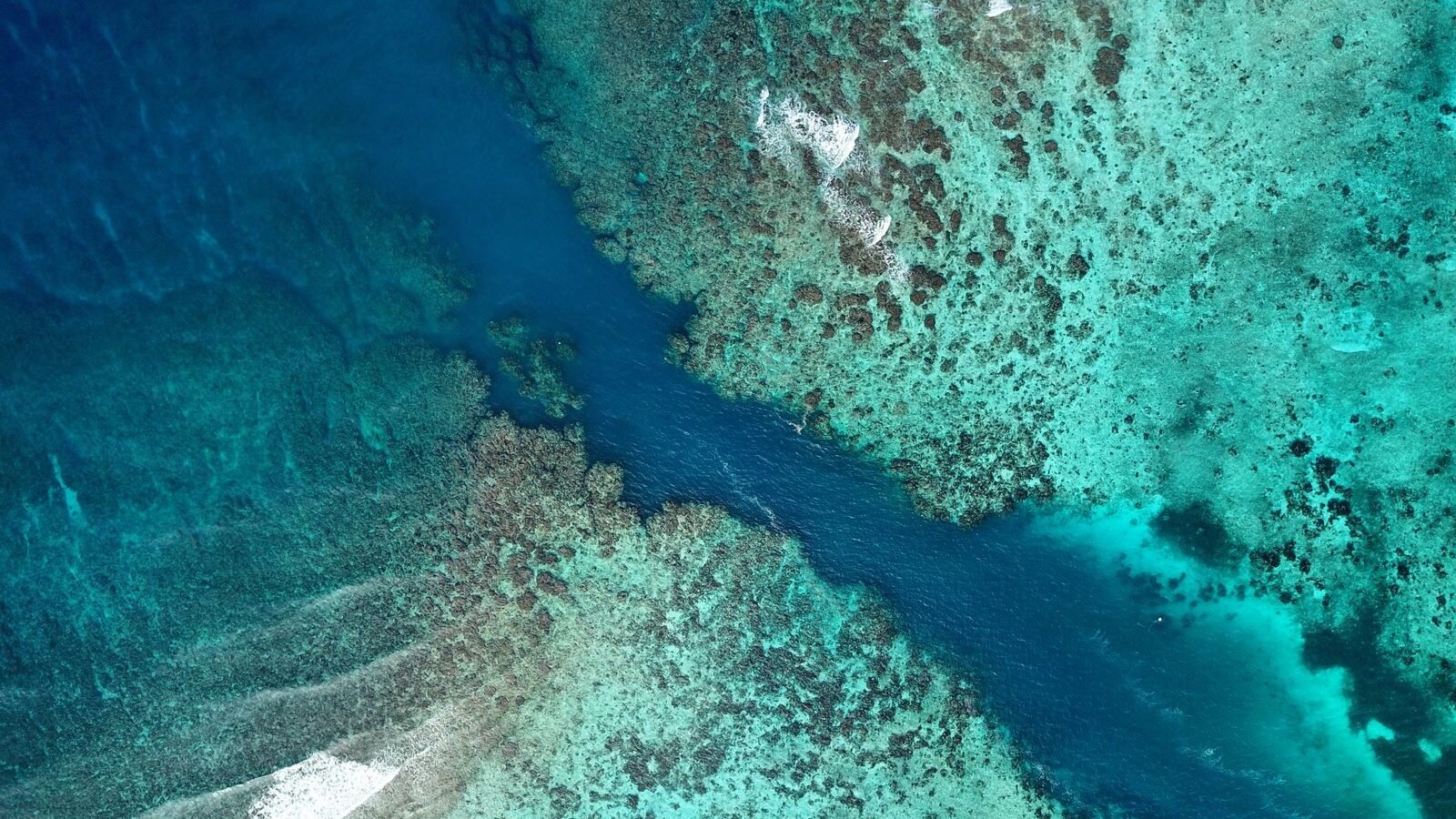
Cover photograph: Anse La Roche Bay, Carriacou, Caribbean. Archive photograph: Hugh Whyte / Unsplash.
Documentary Sources
- United Nations Environment Programme — Session on regional cooperation and the 30×30 target, October 29, 2026.
- Wildlife Conservation Society — Launch of the Caribbean Biological Corridor 30×30 Plus Marine Action Plan, October 27, 2026.
- Convention on Biological Diversity — Target 3 of the Global Biodiversity Framework.
- Ocean Protection Gap Report 2026, September 2026.
- UNEP — United Nations Biodiversity Conference, COP17.